
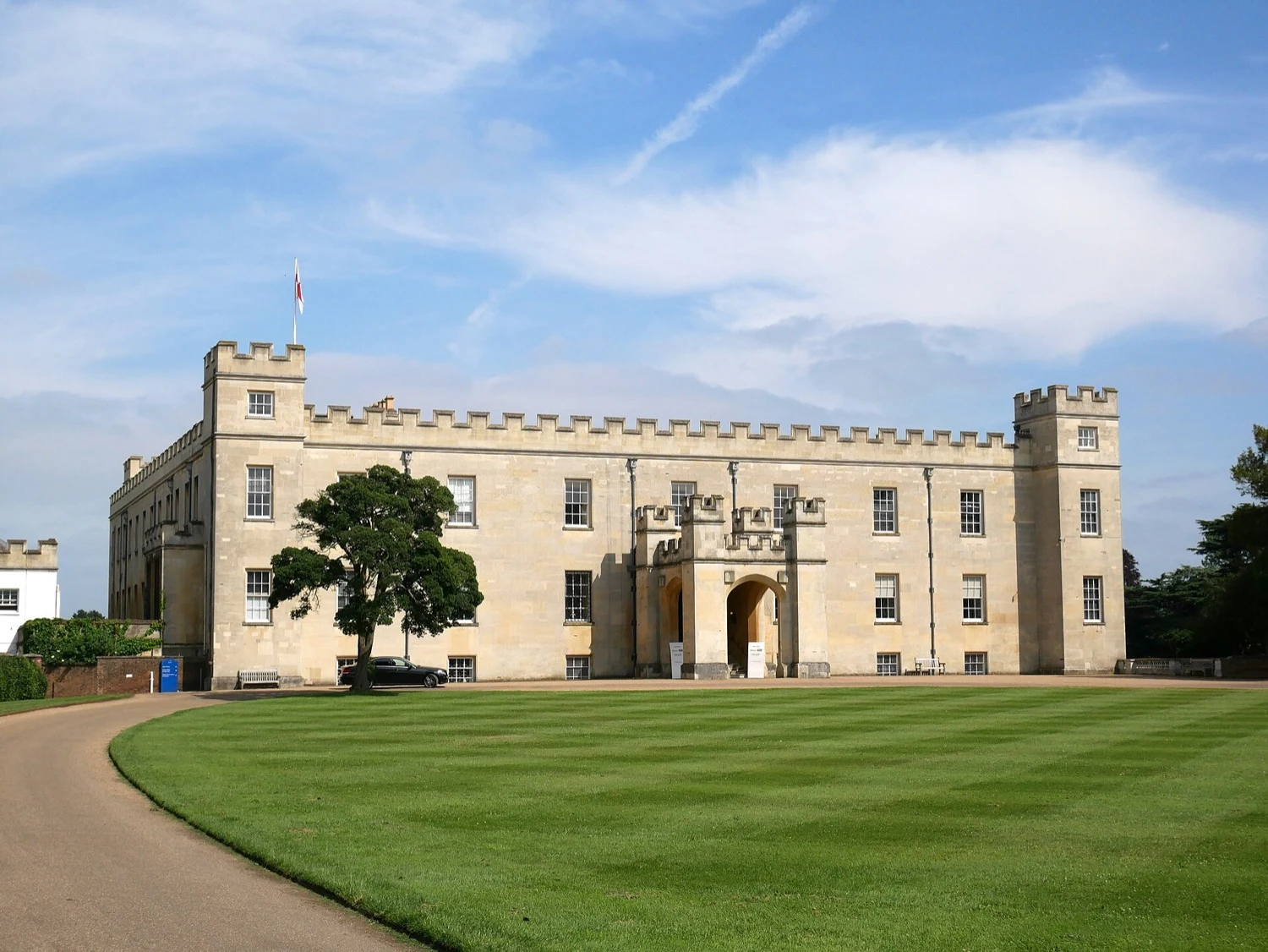
On the bank of the Thames, facing Kew, Syon House is one of London's great aristocratic mansions — and one of the most laden with tragic history. Beneath its Georgian dress lies a Tudor past: that of a suppressed abbey turned stage for one of the darkest episodes of the English succession.
From abbey to palace
Syon was first a Bridgettine abbey, one of the richest in England, founded in the fifteenth century. In the dissolution of the monasteries, Henry VIII closed and seized it; the estate then passed to the Seymours and the Percy dukes of Northumberland, who made it a courtly residence. Look at the crenellated quadrangular block: beneath later work, the Tudor plan of the great house built on the abbey's foundations survives.
The house of the nine-days' queen
In July 1553, it was at Syon that the Duke of Northumberland offered the crown of England to his daughter-in-law, Lady Jane Grey, a girl of sixteen. She reigned only nine days before being overthrown by Mary Tudor, imprisoned in the Tower, and executed. Syon keeps a grimmer legend too: the coffin of Henry VIII, on its way to Windsor in 1547, is said to have rested here overnight — and to have burst open, dogs coming to lick the king's remains, fulfilling, it was said, a prophecy. Don't miss: the crenellated Tudor front, the great hall, the riverside park (the famous interiors are eighteenth-century, by Robert Adam).
Did you know?
A preacher had warned Henry VIII that dogs would lick his blood as they had licked that of the biblical king Ahab. When the king's coffin, on the road to Windsor, sprang open overnight at Syon and dogs came near it in the morning, contemporaries saw the prophecy fulfilled. True or legend, the story clings to Syon like a shadow.
Info
Syon House is at Brentford (west London), on the Thames; a seat of the dukes of Northumberland, house and park open to the public in season. Hours to be checked.