
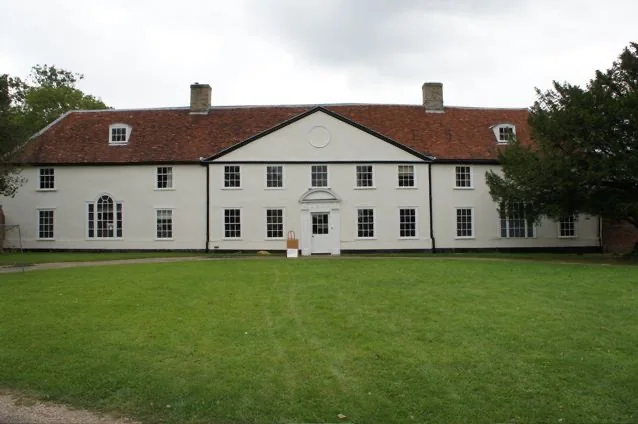
In deep Suffolk, Wingfield College is a former college of priests, founded in the Middle Ages and intimately linked to one of the most dangerous families for the early Tudors: the de la Poles, Dukes of Suffolk, heirs of the Yorkist royal blood. Its history is that of an institution and a dynasty effaced together by the rise of the Tudors.
A college of priests
Wingfield College was founded in 1362, by the will of Sir John de Wingfield, chief of staff of the Black Prince. It was a college of priests: a community (a master, nine chaplains, three choristers) charged with celebrating masses for the repose of the souls of the founders. This type of institution — the chantry college — was very widespread in the late Middle Ages. Wingfield functioned under the Tudors until its dissolution, and it was closely linked to the de la Poles, Earls then Dukes of Suffolk, who made it their institution and were buried in the adjacent church.
The fall of the de la Poles
The de la Poles were no ordinary family: by their descent, they carried the royal blood of the Yorks — the 'White Rose'. This made them potential claimants to the throne, and thus a mortal danger to Henry VII and then Henry VIII, who methodically eliminated the members of the line (executions, exiles, imprisonments). In 1542, the college of Wingfield was dissolved as part of the suppression of religious institutions — at the very moment when the de la Pole line was finishing dying out. The buildings were converted into a dwelling. Wingfield thus illustrates how the Reformation and Tudor reason of state effaced together an institution and a rival dynasty. To see: the Wingfield Barns (restored fourteenth-century college buildings), the church of St Andrew (fifteenth-century misericords, de la Pole funerary monuments), the neighbouring Wingfield Castle.
Did you know?
The dissolution of Wingfield College in 1542 coincides almost exactly with the extinction of the family that had kept it alive. The de la Poles, bearers of the Yorkist White Rose, were hunted by the Tudors as dynastic rivals: the last serious claimant of the line was executed under Henry VIII. To efface their college was to efface even the institutional memory of a house that had dared to claim the throne.
Notes
Wingfield College lies at Wingfield, Mid Suffolk; the former college buildings (Wingfield Barns) and the church of St Andrew open to the public; the neighbouring Wingfield Castle is a private residence. Hours to check.
Quiz
- What was Wingfield College?
- A college of priests (chantry)
- A university
- A fort
- Which family was linked to it?
- The de la Poles, Dukes of Suffolk
- The Boleyns
- The Seymours
- What did the de la Poles carry as dynastic inheritance?
- The Yorkist royal blood (the 'White Rose')
- The crown of Scotland
- The duchy of Brittany