
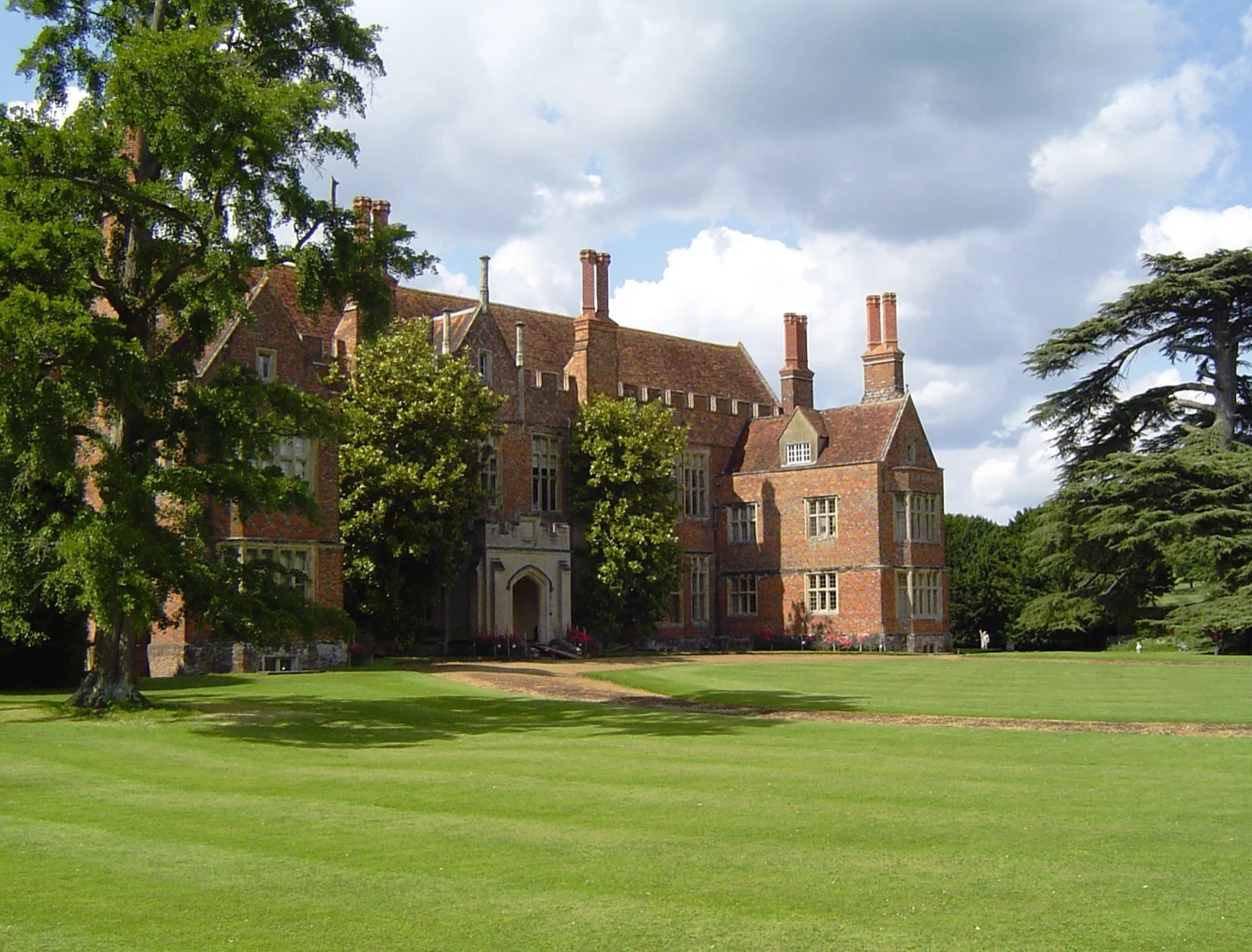
By the Thames, away from the roads, Mapledurham House raises its rose-brick gables and tall twisted chimneys: an Elizabethan manor of the late sixteenth century, held by the same family — the Blounts — for more than four centuries, and faithful to the Catholic religion in an England turned Protestant.
An Elizabethan brick manor
The present house was built in the late sixteenth century (around 1585-1612) for Sir Michael Blount, Lieutenant of the Tower of London. Look at the rose brick laid in dark diamonds (diaper work), the great mullioned windows, the gables and the wrought chimneys: it is the vocabulary of the Elizabethan house, less spectacular than the "prodigy houses" but of great unity. Inside are said to hide priest holes — for the Blounts, Catholic "recusants", sheltered priests at the peril of the law.
The house that crossed the centuries
Kept by the Blounts, the house keeps its Jacobean staircase, its plaster ceilings and its small Catholic chapel of 1797. It inspired writers: the poet Alexander Pope, friend of the Blount sisters, stayed here; a setting from The Wind in the Willows and films has been recognised in it. Just beside it, the Mapledurham watermill on the Thames still grinds flour — the last working mill on the river. Don't miss: the brick front, the staircase and ceilings, the chapel, the neighbouring mill.
Did you know?
In the walls of Mapledurham hide "priest holes": secret recesses where, under Elizabeth I, a Catholic family could conceal a priest in case of a search. To celebrate Mass had become a crime; specialist craftsmen — the most famous being the Jesuit Nicholas Owen — cut these hides into the thickness of houses. The Renaissance manor thus sheltered, behind its fine panelling, a clandestine religion.
Info
Mapledurham House is at Mapledurham (Oxfordshire), on the Thames near Reading; the private house of the Blounts, house and mill open to the public on certain summer weekends. Hours to be checked.