
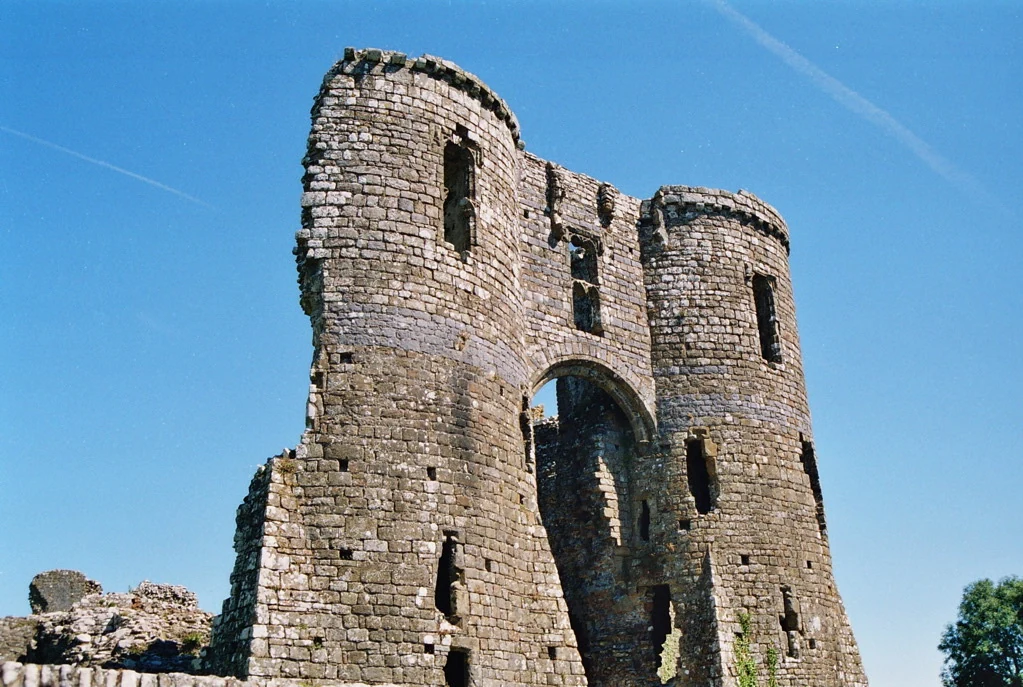
In Pembrokeshire, Llawhaden Castle was a fortified palace-castle of the Bishops of St Davids — at once residence, prison and administrative centre. Its brutal decline at the Reformation illustrates how a reforming bishop could deliberately ruin the heritage of his own bishopric.
A castle of the bishops
Llawhaden was a fortified palace-castle belonging to the Bishops of St Davids, going back to the thirteenth-fourteenth centuries. From the fifteenth century, it was little used as a residence (except by Bishop Hugh Pavy, active 1485-1496) and served above all as a prison and administrative centre for the vast temporal domain of the bishopric. For the Bishops of St Davids, like the great medieval prelates, were also powerful temporal lords, with castles, courts and prisons — a power the Reformation was to dismantle.
The stripping of the Reformation
The fatal blow came with Bishop William Barlow, the first holder of the see after the abolition of the Marcher lordships, a convinced reformer and notoriously hostile to St Davids. In 1536, he had the lead of Llawhaden's roof taken off and sold, leaving the building to decay and fall into ruin. It was the same Barlow who stripped the palace of St Davids of its lead: a reforming bishop deliberately ruining the heritage of his own bishopric, judged too marked by the old religion. The Dissolution moreover amputated the wealth and temporal authority of the see, ending the seigneurial power of the bishops. Llawhaden thus illustrates the destructive face of the Welsh Reformation. To see: the ruined twin-towered gatehouse, the episcopal lodgings, the chapel, the neighbouring planned medieval village.
Did you know?
Bishop William Barlow was an iconoclast in the literal sense: a zealous reformer, he had the lead taken off the roofs of several residences of his bishopric — Llawhaden and the palace of St Davids —, deliberately hastening their ruin. He even dreamed of transferring the episcopal see from St Davids to Carmarthen, judging St Davids too linked to the 'superstitions' of the pilgrimages. A rare example of a prelate who, in the name of his new faith, actively worked at the destruction of the heritage in his keeping.
Notes
Llawhaden Castle lies at Llawhaden, Pembrokeshire; ruins run by Cadw, freely accessible. Hours to check.
Quiz
- What was Llawhaden Castle?
- A fortified palace-castle of the Bishops of St Davids
- An artillery fort
- An abbey
- What did Bishop Barlow do in 1536?
- He had the roof lead taken off and sold
- He enlarged it
- He gilded it
- What does this illustrate?
- A reforming bishop ruining the heritage of his see
- A Spanish invasion
- A miracle