
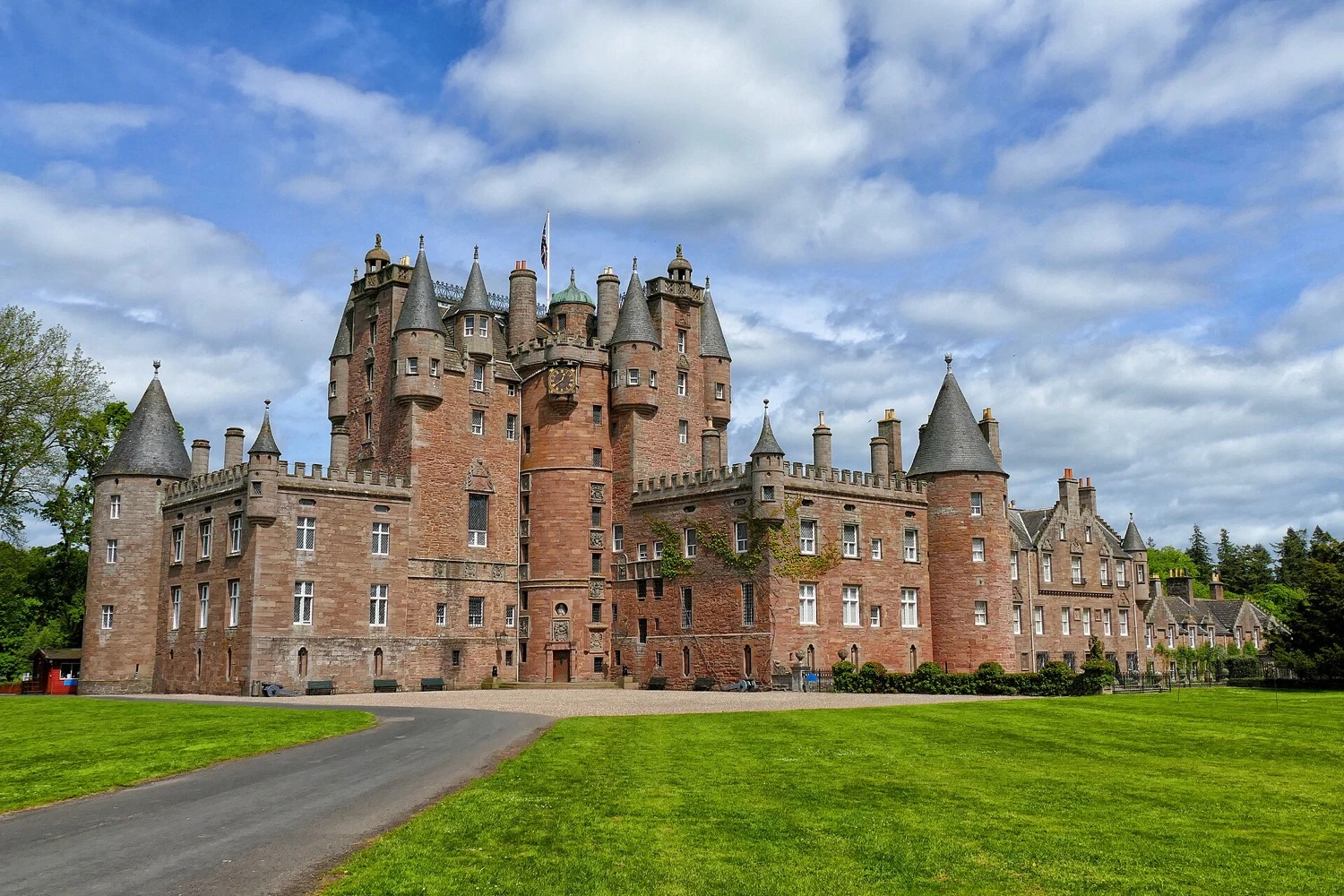
In Angus, Glamis Castle — the seat of the Lyons (later Bowes-Lyon) — raises its turret-bristling silhouette. Beneath the seventeenth-century baronial mantle survives an L-plan tower house remodelled in the sixteenth, the scene of one of the most resounding witchcraft trials of Renaissance Scotland.
The tower of the Lyons
A castle from 1372 (a gift of Robert II to Sir John Lyon), Glamis was rebuilt as an L-plan tower house in the early fifteenth century, and then, in the sixteenth, given a great round stair-tower in the re-entrant angle — a signature of the Scottish architecture of the time. The estate stayed in the Lyon family without interruption.
The burning of Lady Glamis
The Renaissance here is marked by a drama. Janet Douglas, Lady Glamis, wife of John Lyon, 6th Lord Glamis, was accused of treason (1528) and then of witchcraft — of having plotted by magic against King James V. She was burned at Edinburgh on 17 July 1537, and the Crown confiscated Glamis for a time. This trial, one of the most famous of sixteenth-century Scotland, lastingly marked the (sinister) legend of the castle. To see: the sixteenth-century round stair-tower, the L-plan structure, the park.
Did you know?
Accused of plotting by witchcraft against James V, Lady Glamis was executed by fire in 1537 — on doubtful evidence, in a context where the king was persecuting the Douglas family. Glamis kept from it a reputation as a haunted castle, one of the most 'ghostly' in Scotland.
Notes
Glamis Castle lies near Forfar, in Angus; a private castle open to the public. The sixteenth-century layer is partly masked by seventeenth-century remodelling. Hours to check.
Quiz
- Which Renaissance drama is linked to Glamis?
- The trial and burning of Lady Glamis (1537)
- An English siege
- An earthquake
- What was Lady Glamis accused of?
- Treason and then witchcraft against James V
- Stealing the royal treasure
- Piracy
- Which family held Glamis without interruption?
- The Lyons (Bowes-Lyon)
- The Gordons
- The Campbells