
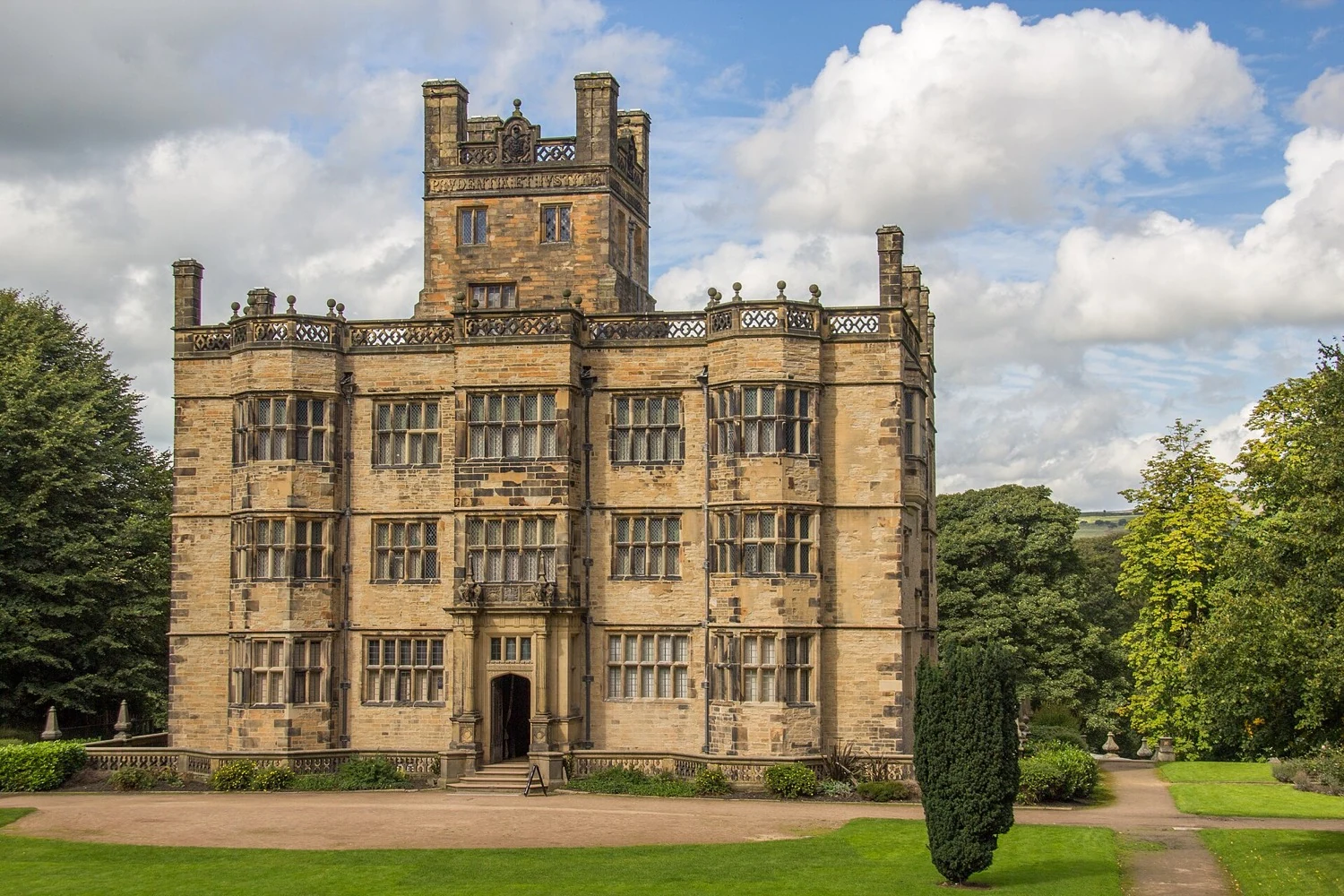
By the River Calder in Lancashire, Gawthorpe Hall raises a tall, compact silhouette of grey stone, vertical and symmetrical: an Elizabethan house of the very start of the seventeenth century, built by the Shuttleworth family around an old defensive tower.
A new house around an old tower
The foundation stone was laid on 26 August 1600; the house was completed around 1605 for the Reverend Lawrence Shuttleworth, who took over the project from his brother Richard. The remarkable feature: the new house wraps around a pele tower — a fourteenth-century watch-tower, built against Scottish raids. Look at the tall, regular front, the mullioned windows, the belvedere turret at the top: the compact, vertical plan betrays the hand (or at least the influence) of Robert Smythson, the architect of Hardwick. Inside survive fine plaster ceilings and inlaid panelling of the early seventeenth century.
From warlike frontier to house of prestige
Gawthorpe shows the pacification of the North under the Tudors: where towers were once built to survive raids, a house of light and display is now raised, keeping the old tower as its core. The house later passed to the Kay-Shuttleworths and holds an important collection of textiles and lace. Don't miss: the Smythsonian front, the enclosed pele tower, the plaster ceilings, the panelling, the textile collection.
Did you know?
At the heart of Gawthorpe hides a tower of war: a fourteenth-century pele tower, built when Lancashire feared raids from Scotland. Around 1600 the Shuttleworths did not demolish it — they built their Renaissance house all around it, sealing it in a casing of windows and symmetry. The house of peace has literally swallowed the tower of war.
Info
Gawthorpe Hall is at Padiham, near Burnley (Lancashire); a National Trust property (run with the county), house and park open to the public in season. Hours to be checked.