
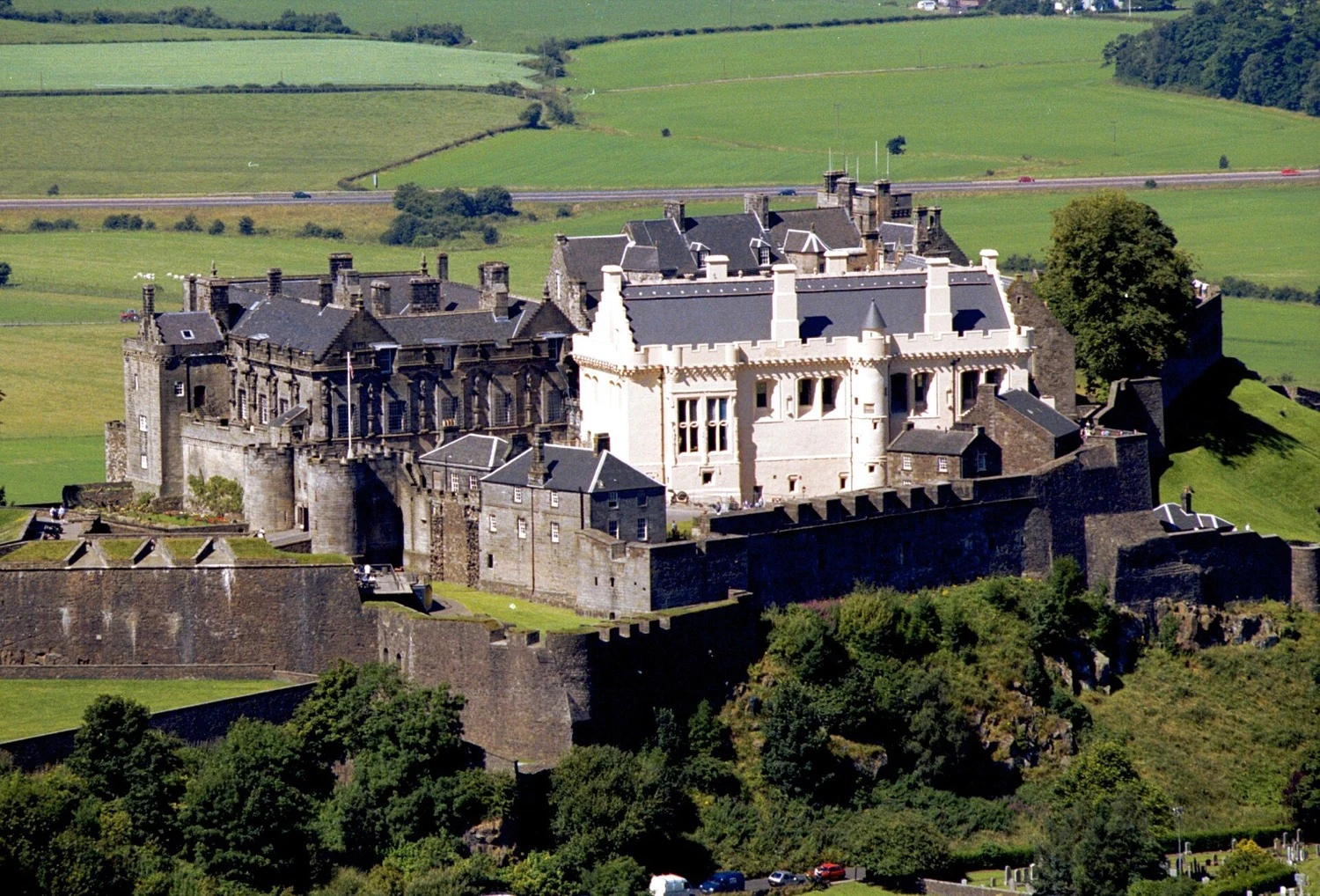
A must-see: raise your eyes to the four façades of the Royal Palace and try to count the crowd of stone figures that inhabit them — more than two hundred and fifty, perched on twisted columns and carved corbels. Gods and goddesses of antiquity rub shoulders with angels, chubby putti and frankly grinning devils; at the south-west corner stands James V himself, full-length, watching over his creation. The king raised this palace between 1538 and 1542 for himself and his French queen, Mary of Guise, and clad its walls in a sculpted manifesto: peace, plenty and justice, a new Golden Age proclaimed in stone. The architecture is French-inspired, but the statues — cut by Scottish masons — follow the prints of the German engraver Hans Burgkmair, a Northern Renaissance rendered in golden sandstone.
Did you know?
The statue crowning the corner of the palace is thought to portray James V in disguise — tradition links it to the folk figure of the "Gudeman of Ballengeich," the guise under which the king reputedly went among his people incognito.
Info
- Exterior programme, freely visible from the courtyard and esplanade.
- Not to be confused with the Stirling Heads (the oak ceiling roundels indoors, treated separately).
- The sculpture dimension of Stirling Castle (see the linked monument entry).