
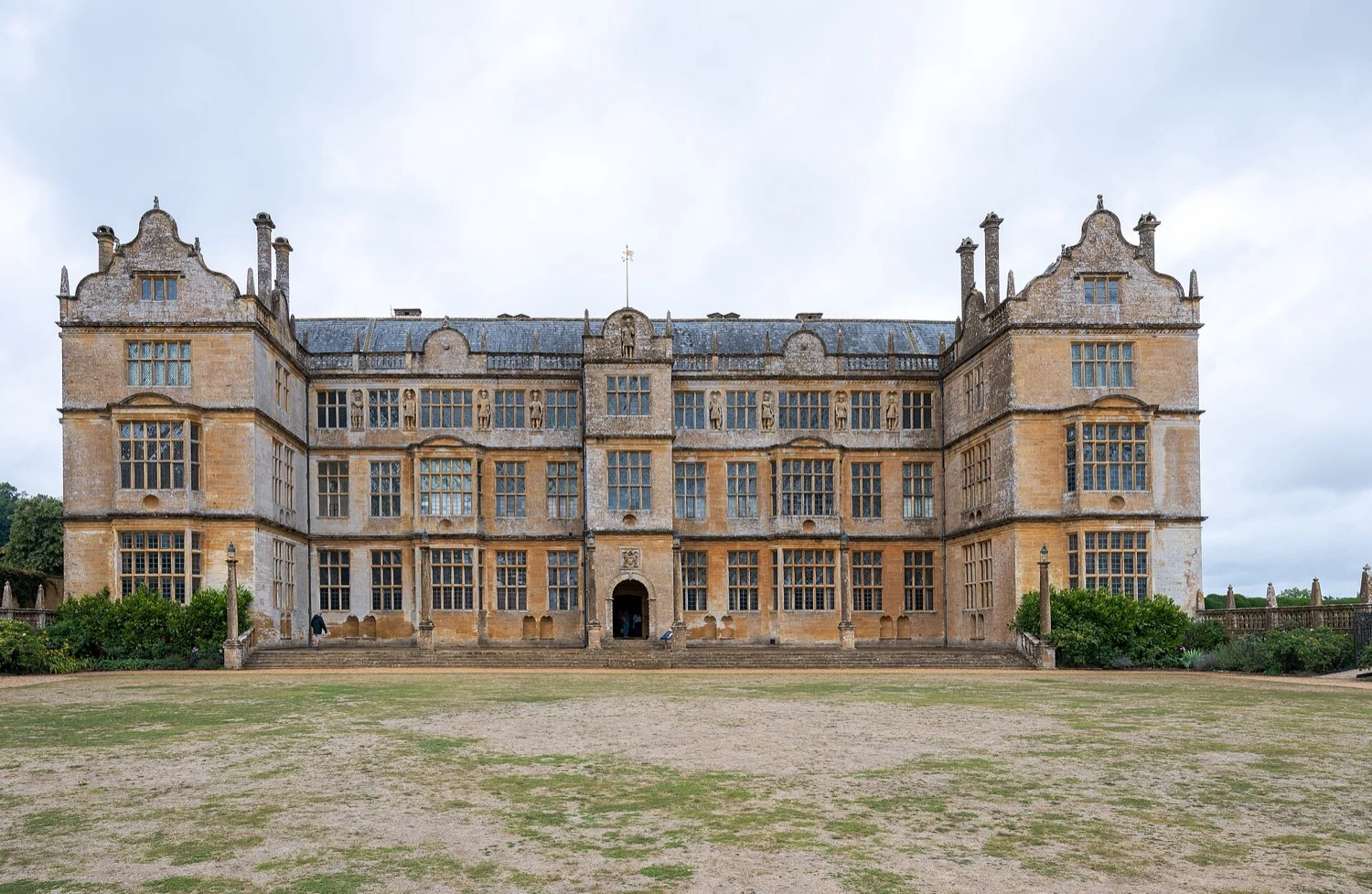
On the eastern front of Montacute, ranged high on the wall between the windows, nine stone figures stand guard in Roman armour: the Nine Worthies, carved around 1598-1601 at the same time as the house. Rare survivors of a much-loved theme, they make the façade an open-air lesson in virtue.
Nine heroes for a model
The Nine Worthies were, in the medieval and Renaissance imagination, the nine greatest heroes of history, in three triads: three pagans (Hector, Alexander, Caesar), three Jews (Joshua, David, Judas Maccabeus), three Christians (King Arthur, Charlemagne, Godfrey of Bouillon). By setting them on his front, Sir Edward Phelips, builder of Montacute, did not merely decorate: he displayed a programme, placing his house — and himself — under the patronage of chivalric virtue and the glory of great men.
Sculpture in the service of prestige
Carved in the golden stone of Ham Hill, these life-size figures are a rare surviving example of secular architectural sculpture of the Elizabethan age. They show how, around 1600, the great English house thinks of itself as a theatre: the façade speaks, proclaiming the rank and values of its master. To see: the nine figures in Roman armour on the east front, the golden Ham Hill stone, the row above the long gallery.
Did you know?
The theme of the Nine Worthies was so popular in Shakespeare's day that the playwright mocks it in Love's Labour's Lost: characters make fools of themselves trying to play the Nine Worthies in an amateur show. While London laughed at them on stage, Sir Edward Phelips was having them very seriously carved in the stone of his house.
Info
The Nine Worthies adorn the east front of Montacute House (Somerset); National Trust; visible from the forecourt.