
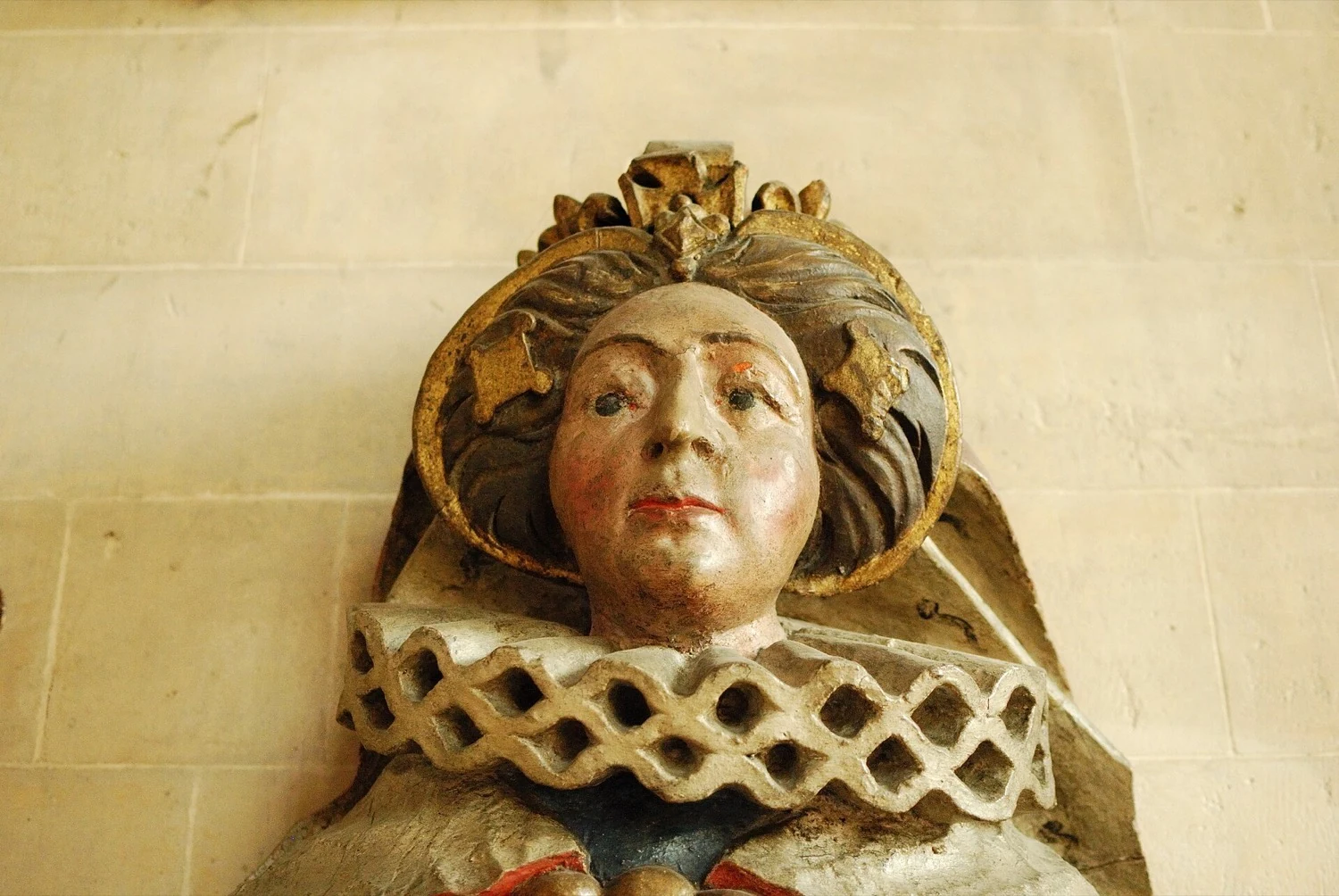
To see: a queen of wood, not of stone. Unlike the alabaster effigies of the great churches, Elizabeth I is shown here standing, carved in wood and heightened with colour — a figure that has survived the centuries in St Mary Redcliffe, Bristol. It dates from the queen's own reign, around 1570, and is bound to the moment Elizabeth visited the city in 1574 — it was at Redcliffe that she is said to have called it "the fairest, goodliest and most famous parish church in England". Painted wood, more fragile than stone, has been refreshed more than once; yet the very presence of a secular royal statue kept in a parish church speaks of the civic pride of a great merchant city under the Tudors.
Did you know?
St Mary Redcliffe, paid for by Bristol's merchants, was so vast and richly wrought that the queen is said to have ranked it above every parish church in the realm — and the parish has kept her effigy ever since, like a civic relic.
Info
St Mary Redcliffe, Bristol. Standing painted wooden statue of Elizabeth I; c.1570, linked to the 1574 royal visit. Repainted several times. (Attribution and material confirmed; regalia details to be checked on site.)