
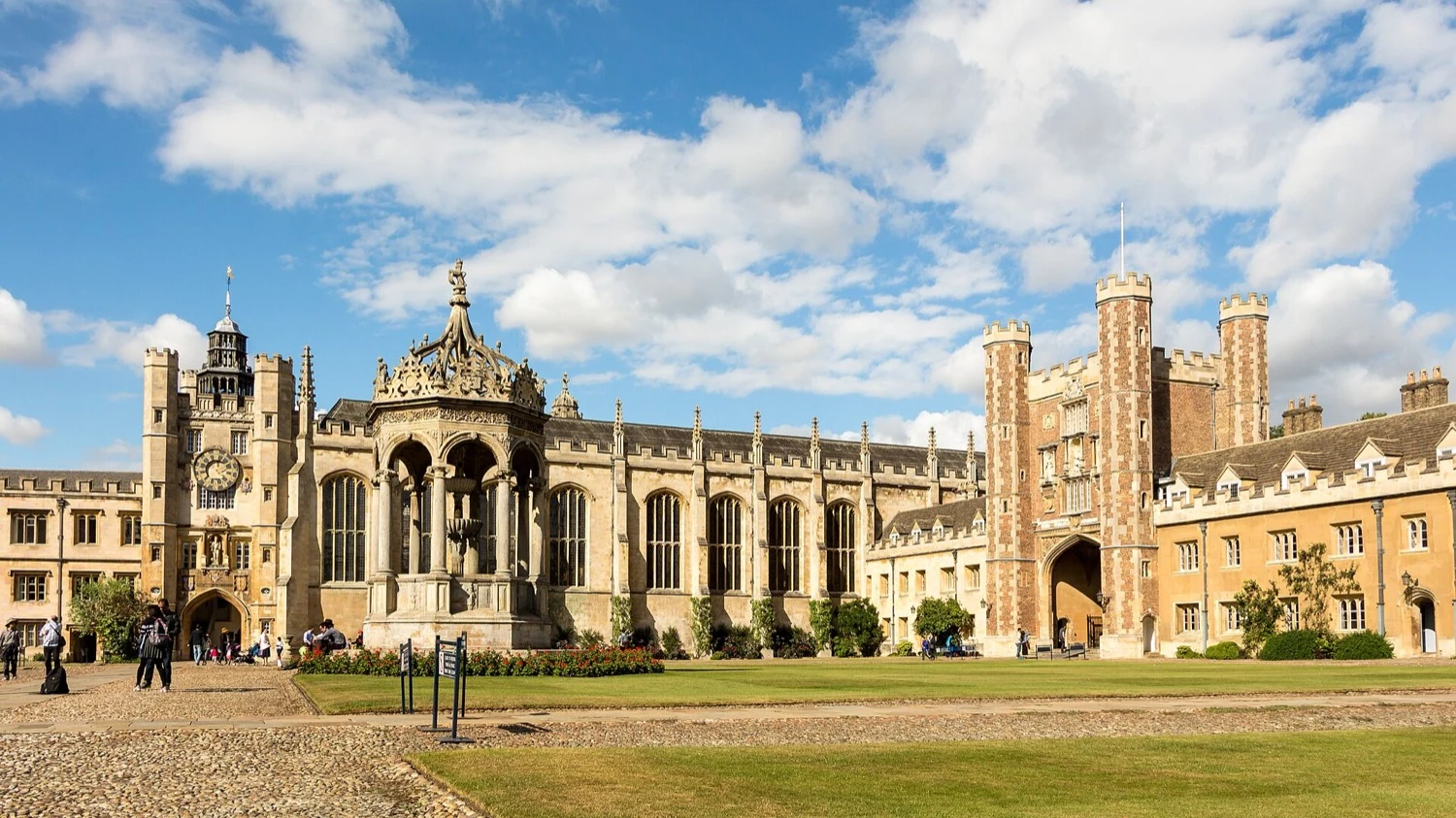
To see: look up at the east (street) face of Cambridge's largest gateway. In its niche stands Henry VIII, the college's founder, carved in 1615 by William Cure the Younger; beneath him spreads a heraldic carpet — the arms of Edward III and his sons, painted and sculpted shields that turn the gate into a dynastic tree in stone. Step through the vault: the inner face, looking onto Great Court, sets three statues in niches — James I, Anne of Denmark and the young Prince Charles — all by Cure, in that same year of 1615. Here sculpture does not merely adorn the building; it rules it, turning a passageway into a manifesto of royal power.
Did you know?
Henry VIII's sceptre is gone: in its place the king has long brandished a wooden chair leg. Legend blames a prankish Victorian undergraduate; the truth points rather to a window-cleaner who, lacking the original orb and sword, armed the statue with this absurd stick. The joke stuck: England's most feared king eternally threatens passers-by with a piece of furniture.
Info
- Gate originally raised for King's Hall (c.1490), completed under Henry VIII c.1535; absorbed into Trinity (founded 1546).
- East face: Henry VIII + arms of Edward III and his sons. West face (Great Court): James I, Anne of Denmark, Prince Charles.
- Sculptor of all four royal statues: William Cure the Younger, 1615.