
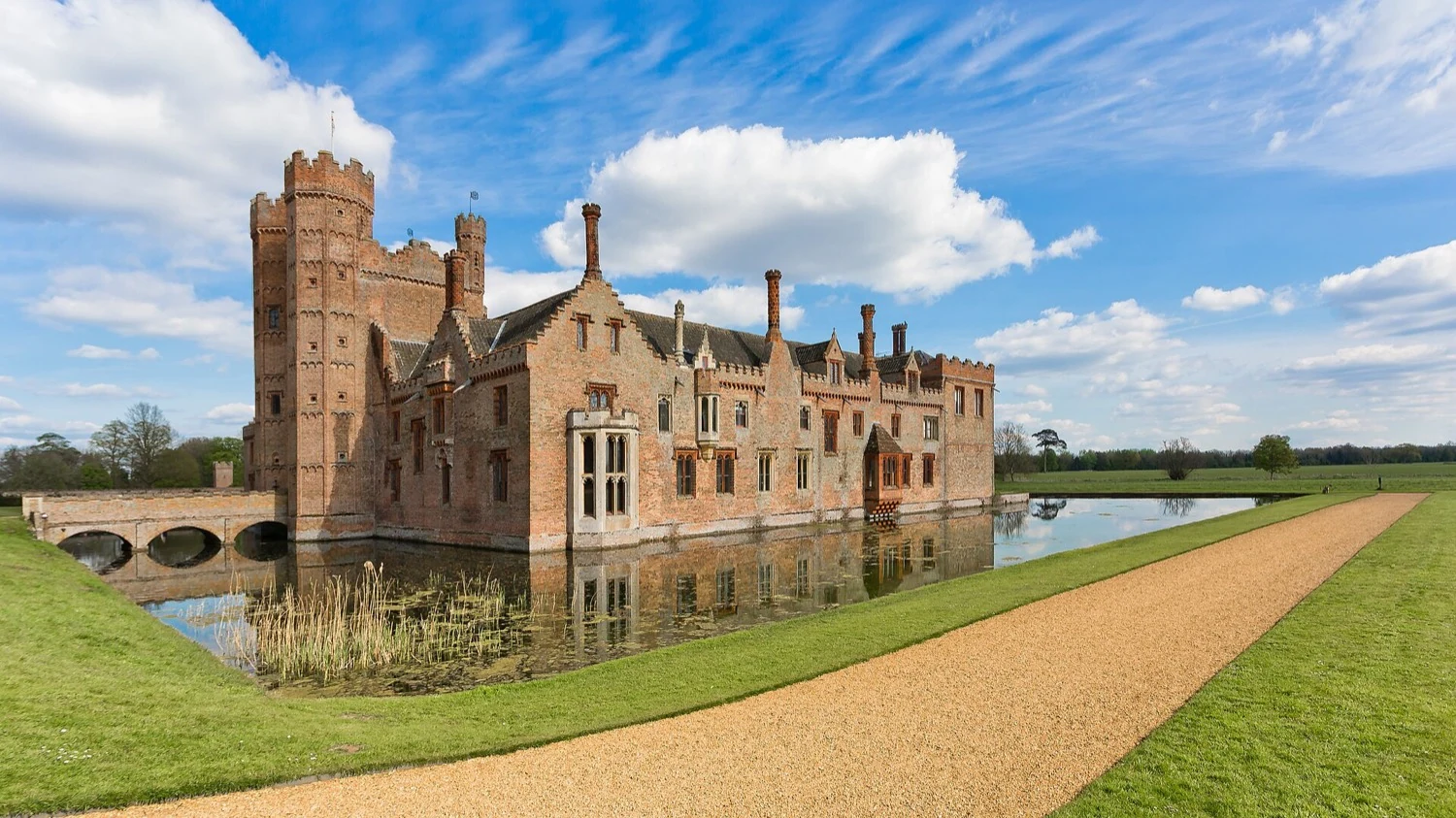
In the village church of Oxborough, Norfolk — a stone's throw from Oxburgh Hall, the Bedingfelds' manor — hide two monuments without equal in England: Renaissance terracotta tombs, so fine and so Italian one would think them imported from Tuscany. They are, by general agreement, the finest of their material in the whole country.
A Renaissance of terracotta
Between 1525 and 1550, the Catholic Bedingfeld family raised in their chapel two tombs not of stone or marble, but of moulded and fired terracotta — a technique from Italy. Look at the decoration: crested canopies, cherubs, dolphins, pilasters, scrollwork — the whole vocabulary of the early Italian Renaissance, transposed into clay. It is the same vein, and probably the same hand of Italian craftsmen (and Flemings trained in Italy), as the famous terracotta of Layer Marney in Essex: a small colony of southern ornamentists sowed, in a few English churches, these flowers of clay.
The luxury of a new material
Why terracotta? Because moulding allowed a profusion of "antique" ornament impossible or ruinous in stone — and because, in the England of the 1520s, it was the height of modernity, the mark of a patron abreast of continental fashion. The Bedingfelds, faithful to Rome, thus left in their church a manifesto of Renaissance taste. To see: the two canopied tombs, the cherubs and dolphins, the antique pilasters, the kinship with Layer Marney.
Did you know?
Ornamental terracotta flowered in England only very briefly, in the 1520s-1540s, before vanishing almost at once: the Reformation dried up the great religious building sites, and the exotic material found no successor. Oxborough and Layer Marney are the rare survivors of that flash of fashion — an Italian Renaissance of clay, extinguished before it took hold.
Info
The Bedingfeld tombs are in the church of St John the Evangelist, Oxborough (Norfolk), near Oxburgh Hall; Grade I; church in the care of the Churches Conservation Trust.