
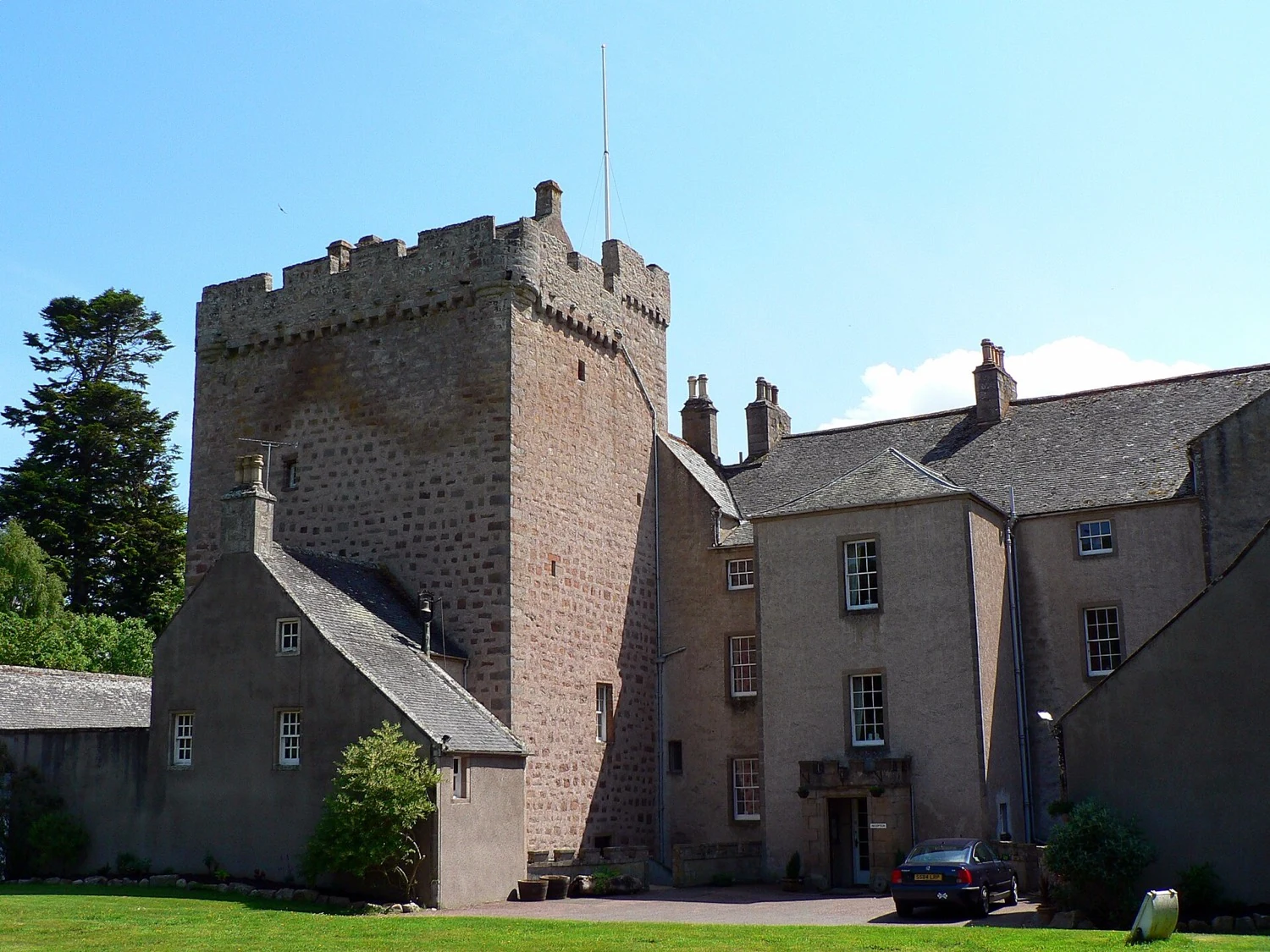
Between Inverness and Nairn, Kilravock Castle is the seat of Clan Rose, barons of Kilravock — a family of exceptional continuity, present here for more than twenty-five generations. Its fifteenth-century keep received Mary Stuart during her progress in the North.
The keep of the Roses
The old core is a keep raised around 1460, under licence from the Lord of the Isles. Around it, the house was enriched with ranges over the centuries. What sets Kilravock apart is the permanence of its family: the Roses have succeeded each other here without interruption, a rare case of direct descent over half a millennium — a stability that contrasts with the confiscations and ruins of so many other Scottish castles.
The queen and the fortifications
The Renaissance period here is marked by the visit of Mary Stuart in 1562, during her northern campaign, and then by documented fortification works — including a new iron gate fitted in 1568 by the smith George Robertson. Kilravock illustrates the life of a Highland noble family, between loyalties, defence and the receiving of the great.
What to see
- The fifteenth-century keep.
- The composite ensemble (tower + later ranges).
- The setting between Inverness and Nairn.
Did you know?
Kilravock received two guests of royal blood two centuries apart: Mary Stuart in 1562, and then — much later, in 1746 — Prince Charles Edward Stuart, who stayed four days just before the disaster of Culloden. The same old tower saw the dawn and the dusk of the House of Stuart pass by.
Practical information
Kilravock Castle lies near Croy, in the Highlands. Owned by a trust; public access is limited (the castle is not freely open). Check against the official sources.
Quiz
- Which clan has held Kilravock for centuries?
- The Clan Rose
- The Clan Campbell
- The Clan Gordon
- Which queen was received here in 1562?
- Mary Stuart
- Elizabeth I
- Margaret Tudor
- What is exceptional about the Rose family at Kilravock?
- A direct descent over more than 25 generations
- They stayed only a year
- They were Italian