
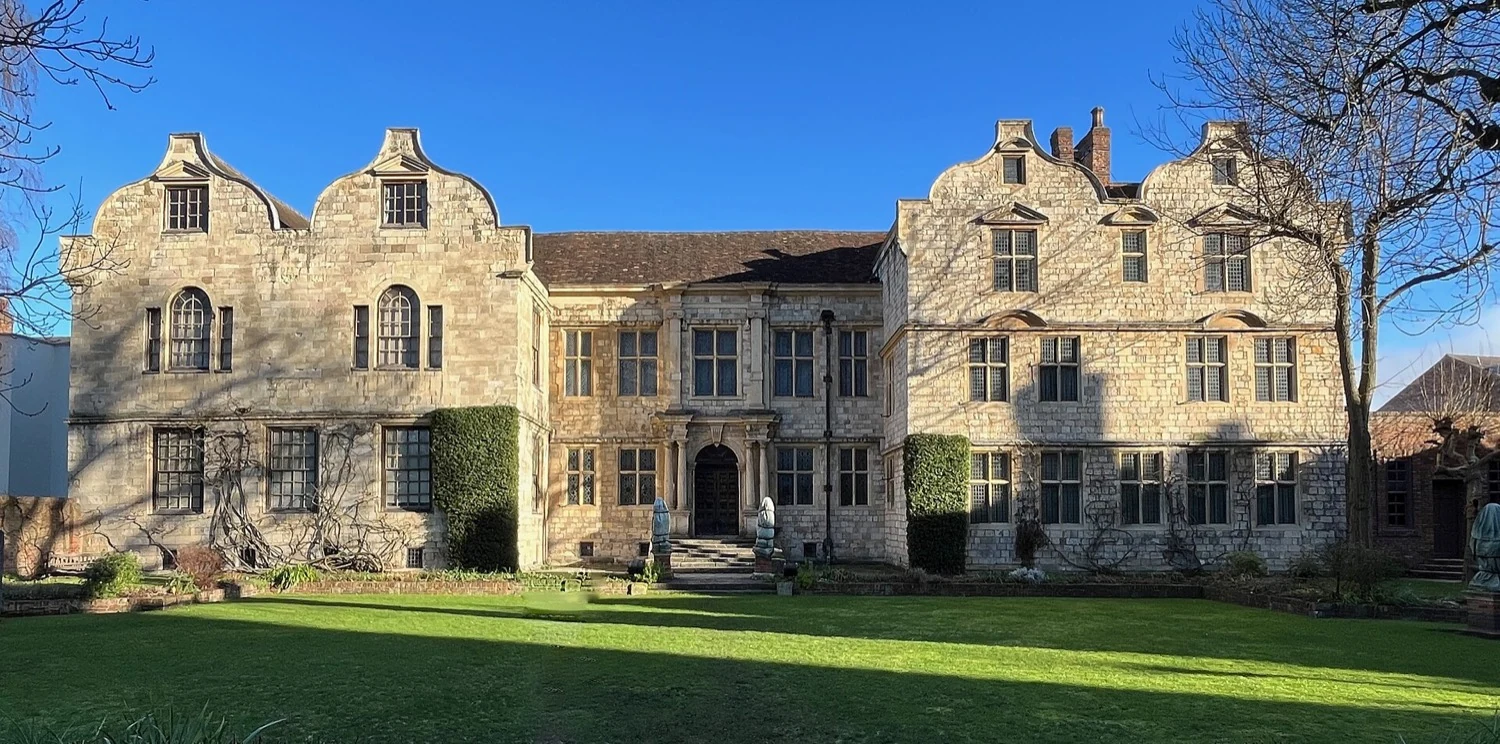
Beside York Minster, the Treasurer's House is an elegant house whose name keeps the trace of an office abolished at the Reformation. From the residence of a medieval ecclesiastical dignitary, it became, over the sixteenth century, a gentleman's house — reflecting the upheavals the Reformation imposed even on the functions of the cathedral.
The end of an ecclesiastical office
The house was the residence of the treasurer of York Minster — one of the great dignitaries of the cathedral, charged with its property and its treasure. But the Reformation abolished this office: on 26 May 1547, the last treasurer surrendered the house to the Crown, his function abolished. The house was then ceded to the Protector Somerset. This episode illustrates how the Reformation not only overturned the monasteries, but reorganised even the internal offices of the cathedrals, abolishing age-old dignities and transferring their property to laymen.
From an archbishop to a king
The house then passed to Archbishop Thomas Young and his descendants, who deeply remodelled it (1561-1568) then rebuilt it almost entirely in the early seventeenth century, giving it its fine symmetrical façade — a sign of the new taste for classical ordering. The summit of its history came in 1617, when Sir George Young received King James I, passing through York — an honour commemorated by a 'King James Room'. The Treasurer's House thus illustrates the destiny of a residence: from a medieval churchman to a gentleman's house able to welcome a king. To see: the remodelled Tudor/Stuart façade and interiors, the great hall, the cellar showing the bases of Roman columns of the road under the house, the rooms furnished (by Frank Green, c. 1900).
Did you know?
The cellar of the Treasurer's House became famous for a legend (not historical): in 1953, a plumber is said to have seen there a ghostly Roman legion pass, visible only from the knees up — because, it is said, the Roman ground level was lower. The anecdote, unverifiable, is explained by an archaeological reality: beneath the house indeed runs an ancient Roman road, whose remains are seen in the cellar. History and legend mingle there, from the Tudor treasurer to the ghosts in sandals.
Notes
Treasurer's House lies at Minster Yard, York, North Yorkshire; a National Trust property, open to the public. Seasonal hours to check.
Quiz
- Why did the Treasurer's House lose its function in 1547?
- The office of Minster treasurer was abolished (Reformation)
- A fire
- A flood
- Which king was received here in 1617?
- James I
- Henry VIII
- Charles II
- What passes beneath the house, visible in the cellar?
- An ancient Roman road
- An underground river
- A medieval tunnel