
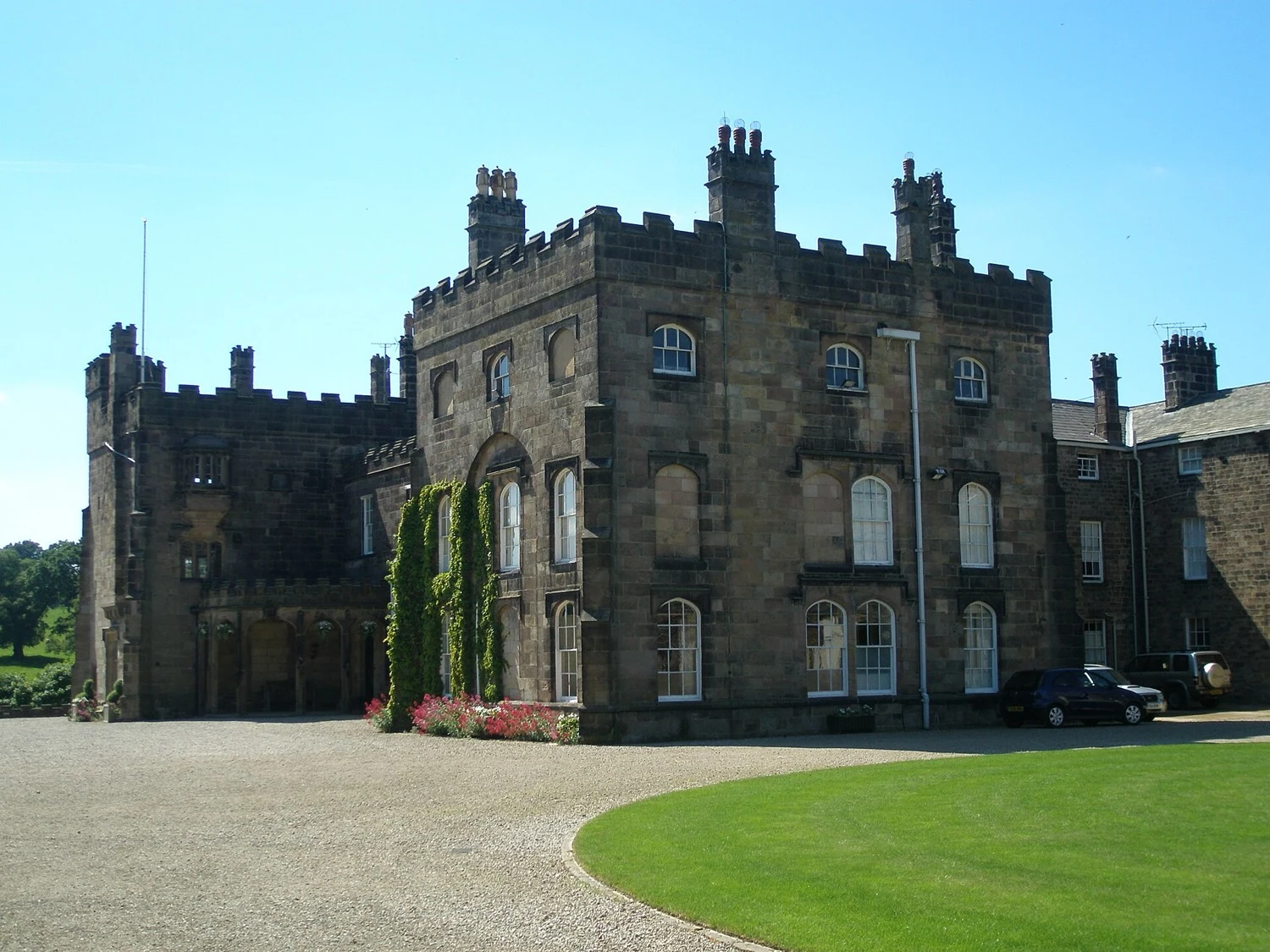
Near Harrogate, in North Yorkshire, Ripley Castle is the stronghold of the Ingilbys, a gentry family that has held it since the early fourteenth century. Its history under the Tudors and the early Stuarts crystallises the drama of the Catholics of the North: loyalty to the old faith, persecution, martyrdom — and the temptation of plot.
A Tudor tower and a tenacious faith
A continuous stronghold of the Ingilbys since 1308, Ripley received its tower in 1548, added by Sir William Ingilby. But the family is marked above all by its obstinate loyalty to Catholicism, in an England become Protestant and increasingly repressive. The castle keeps a 'priest hole' — a hiding place arranged to conceal Catholic priests during searches, at a time when to harbour them was a capital crime. A kinsman of the family, Francis Ingleby, a Catholic priest, was hanged, drawn and quartered at York in 1586 — one of the many martyrs of Elizabethan repression.
The shadow of the Gunpowder Plot
The drama peaked in 1605, with the Gunpowder Plot. Conspirators fleeing after the failure of the plot found brief refuge at Ripley, long enough to procure horses — and the nephew of Sir William Ingilby, Robert Winter, was one of the plotters. Ingilby was accused of treason, then acquitted, but the family brushed ruin. Ripley thus illustrates the tragic fate of the Catholic gentry of the North, caught between loyalty to their faith and loyalty to the Crown, often at the risk of life. Under James VI and I, Sir William Ingilby was nonetheless knighted (1603). To see: the 'priest hole' still in place, the Tudor tower of 1548, the fifteenth-century gatehouse, the gardens and the Capability Brown landscape park.
Did you know?
The 'priest hole' of Ripley was no décor: it was a matter of life and death. In Elizabethan England, to hide a Catholic priest was punishable by death, and 'priest-hunters' (pursuivants) searched suspect houses. Recusant families like the Ingilbys had these ingenious hiding places built by specialised craftsmen (the most famous, Nicholas Owen, was tortured to death), concealed behind a chimney or under a stair, where a man could hold out for hours — sometimes days.
Notes
Ripley Castle lies at Ripley, near Harrogate, North Yorkshire; castle (Ingilby family) and gardens open to the public. Hours to check.
Quiz
- To which faith did the Ingilbys remain loyal?
- Catholicism
- Radical Protestantism
- Islam
- What is a 'priest hole'?
- A hiding place to conceal priests
- A well
- A dungeon
- In which plot did an Ingilby nephew take part?
- The Gunpowder Plot (1605)
- The Rising of the North
- Kett's Rebellion