
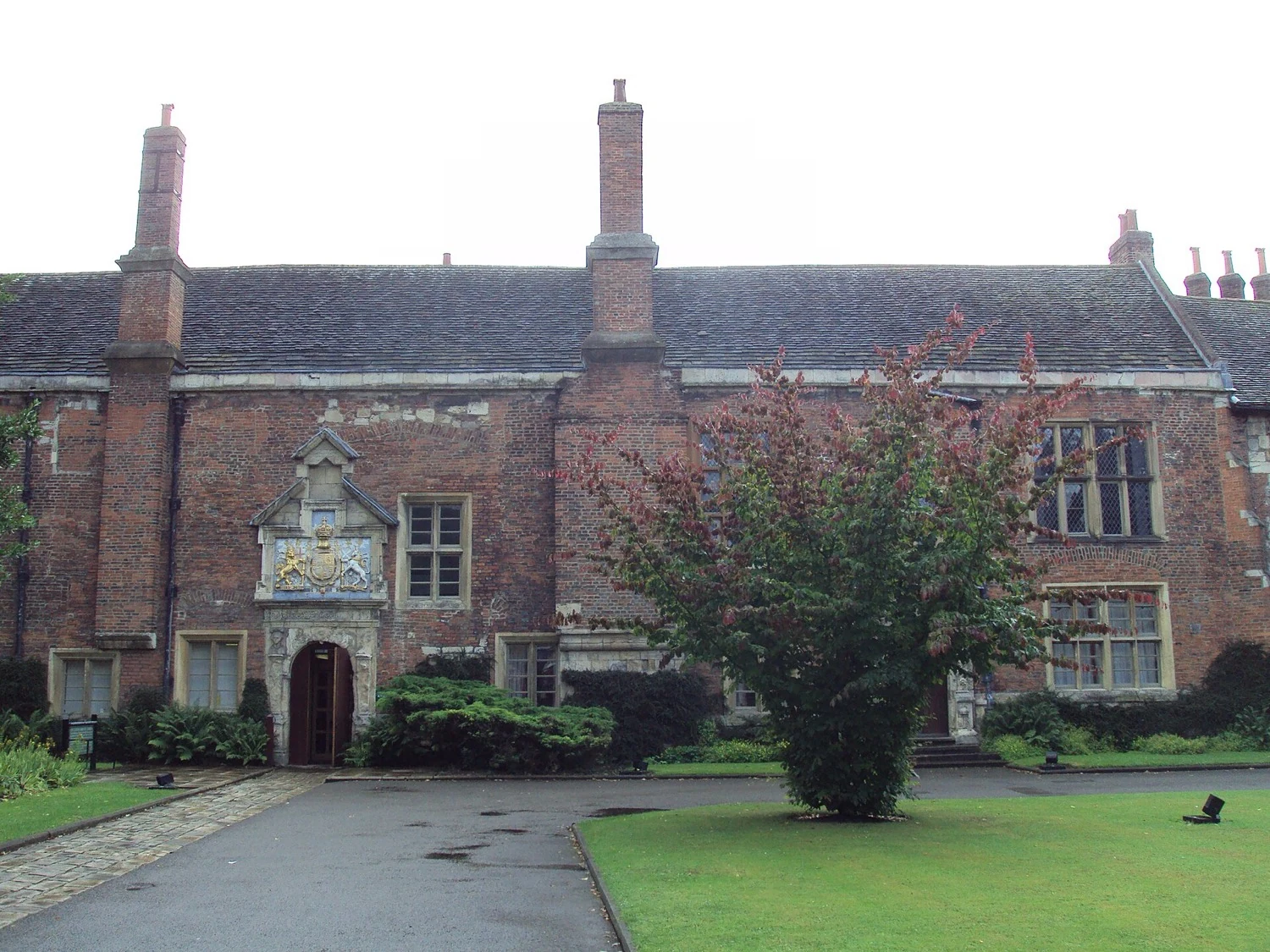
In the heart of York, the King's Manor is a long stone house with armorial doorways, whose story sums up the English Reformation: first the house of the abbots of a rich abbey, it became, after its suppression, the seat of the royal government of the North — the place from which the Crown held the rebellious provinces in hand.
From the abbot's house to the king's palace
The building was first the residence of the abbots of St Mary's, the powerful Benedictine abbey of York (the oldest parts date from the fifteenth century). When Henry VIII dissolved the abbey in 1539, he did not raze the abbot's house: he made it the seat of the Council of the North, the court and government he re-established to hold a North that remained Catholic and restive — the region had just risen in the Pilgrimage of Grace (1536).
The king's visit, the northern court
In 1541, on his great progress to the North, Henry VIII and his fifth wife Catherine Howard stayed at York: over £400 was spent repairing and beautifying the manor to receive them. The King's Manor remained the seat of the Council of the North until its abolition in 1641; its Renaissance doorways still bear the royal arms of the Stuarts. It now houses part of the University of York. Don't miss: the armorial doorways (arms of Henry VIII and Charles I), the courts, the mullioned windows, the whole Tudor-Stuart ensemble.
Did you know?
After crushing the Pilgrimage of Grace — the great Catholic revolt of the North — Henry VIII installed at York not a garrison but a government: the Council of the North, lodged in the former house of the abbot he had just driven out. The symbol was double: the Crown took the place of the Church, and royal law was now written in the very place where the clergy had prayed.
Info
The King's Manor is at Exhibition Square, York (North Yorkshire); a university building (University of York), courts generally accessible; interiors according to use. Access to be checked.