
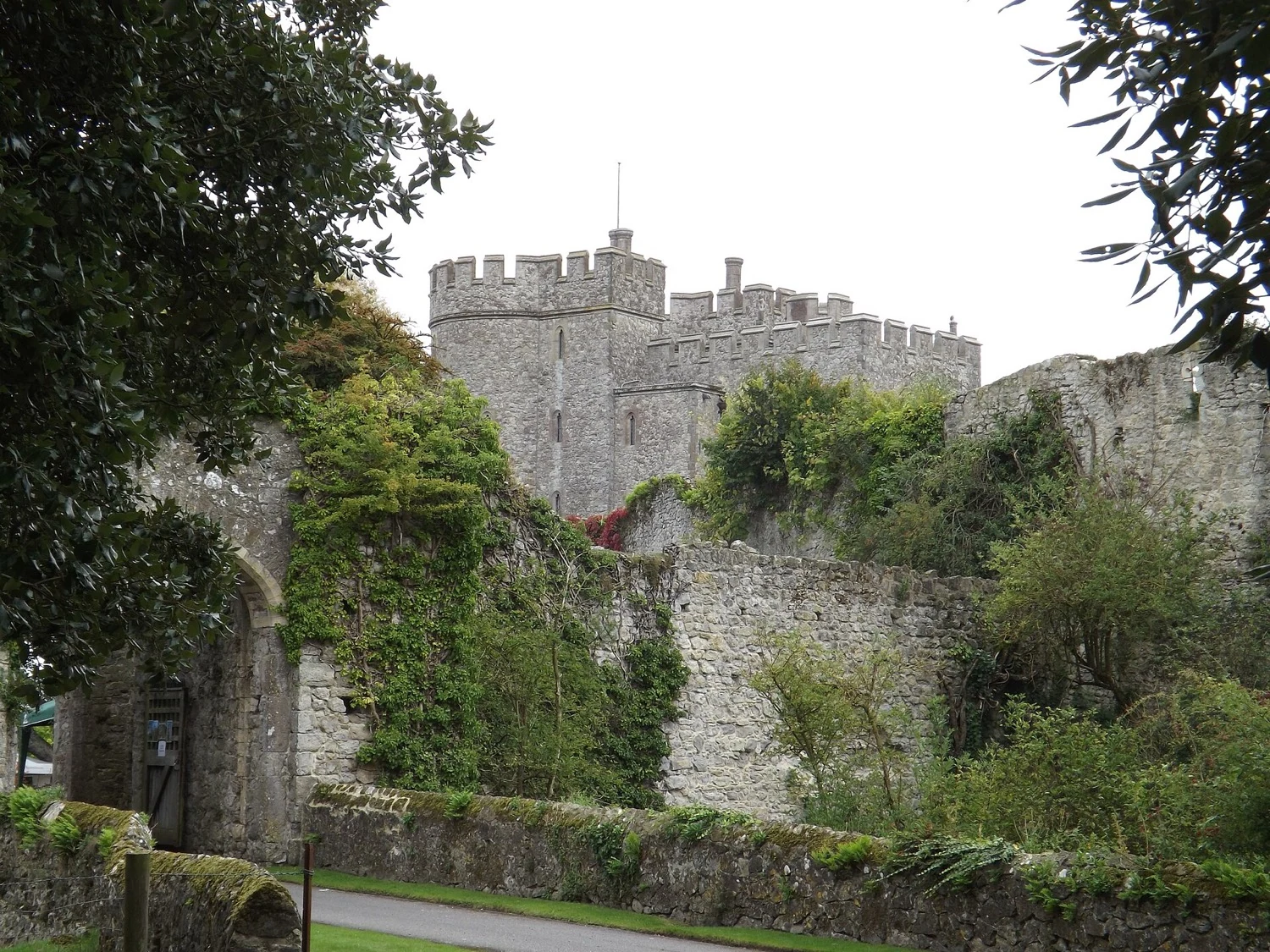
North of Hythe, in Kent, Saltwood raises its Norman gatehouse and its crenellated walls above the moat. Long a stronghold of the Archbishops of Canterbury, this castle was, in Tudor times, the discreet setting of one of the major mechanisms of the English Reformation: the transfer of the Church's property to the Crown.
From archbishop to king
The property of the Archbishops of Canterbury since the Middle Ages, Saltwood remained a Church holding until 1540. That year, Archbishop Thomas Cranmer — the very architect of the English Reformation, author of the Book of Common Prayer — was forced to cede the castle to Henry VIII. The episode is emblematic: under cover of 'gifts' and 'exchanges', the Crown systematically appropriated the great ecclesiastical properties, weakening the Church to the benefit of royal power. Even the first prelate of the realm, architect of the Reformation though he was, could not escape it.
The earthquake of 1580
The castle then knew a trial of another order. On 6 April 1580, one of the most violent earthquakes ever felt in the south-east of England — the 'Kent' or Dover Straits earthquake — shook the region and damaged Saltwood. This event, rare at these latitudes, lastingly marked the fabric and struck the imaginations of the Elizabethan age. To see: the Norman gatehouse (twelfth century) and its gunloops of 1385-94, the defensive walls and the moat (a Grade I listed castle; privately owned, not open to the public).
Did you know?
The man who gave England its liturgy in English had, the same decade, to give up his castle to the king: in 1540, Thomas Cranmer ceded Saltwood to Henry VIII. The great reformer of the Church was thus, like so many others, stripped by the Reformation he served — proof that under the Tudors, no Church property was safe from the Crown.
Notes
Saltwood Castle lies about 1.5 km north of Hythe, Kent; a private castle (Grade I listed), not open to visits. To be treated as a monument to view from outside / historic site.
Quiz
- Who had to cede Saltwood to Henry VIII in 1540?
- Archbishop Thomas Cranmer
- Cardinal Wolsey
- Thomas More
- What does this cession illustrate?
- The transfer of Church property to the Crown (Reformation)
- A military victory
- A royal marriage
- What did the castle undergo on 6 April 1580?
- An earthquake
- A fire
- A siege