
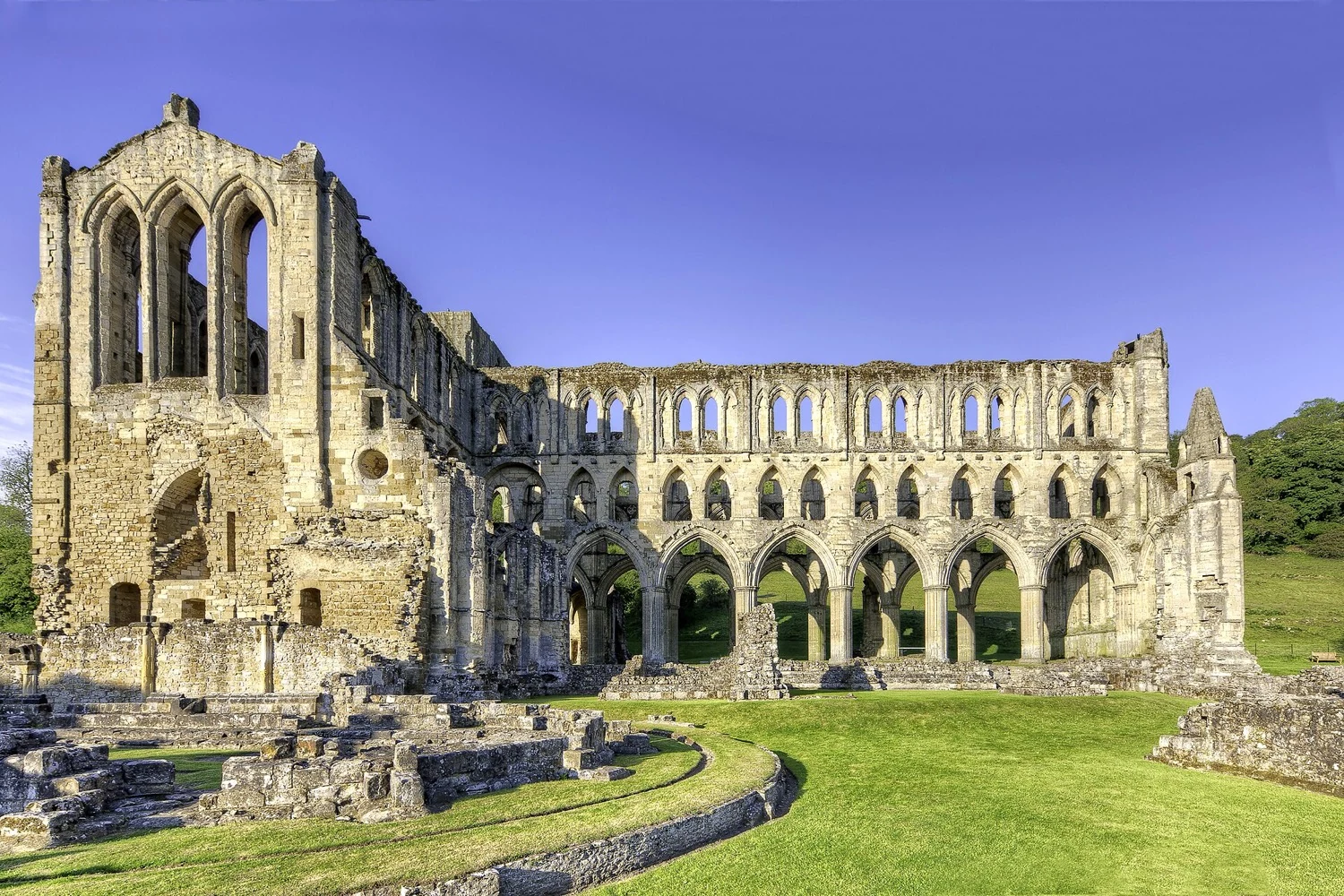
Set in the narrow valley of the Rye, Rievaulx Abbey was, in the Middle Ages, one of the most powerful Cistercian abbeys in England. Its closure in 1538, at the heart of the Henrician Reformation, makes it a major witness to the Dissolution of the Monasteries — the great religious and economic upheaval of the English Renaissance.
A broken Cistercian power
Founded in 1132, Rievaulx numbered as many as 650 monks and lay brothers under the famous abbot Aelred. Look at the huge Gothic choir, rising against the hillside, the arcades of the refectory: all speak of the wealth of a community that ran thousands of sheep and even owned ironworks (the abbey was a smelting centre). In 1538, Henry VIII's commissioners closed the house, dispersed the monks and gave the buildings over to demolition.
From monastery to quarry
The estate passed to the Manners, Earls of Rutland, who worked the site: the roof lead was melted, the stone sold or reused, the forges kept going for a time. What the Dissolution left — a stone vessel open to the sky, of striking beauty — would become, two centuries later, an object of romantic contemplation (the Rievaulx Terrace, eighteenth century, outside our period). Don't miss: the Gothic choir and presbytery, the refectory, the chapter house, the whole monastic plan legible on the ground.
Did you know?
Rievaulx was not only a place of prayer: it was an enterprise. The Cistercians raised vast flocks here and produced iron. When Henry VIII closed the abbey in 1538, it was not only a religious community that was scattered, but one of the biggest economic machines in the North — and its forges kept turning for a time under the new lay owner.
Info
Rievaulx Abbey is near Helmsley (North Yorkshire); a site managed by English Heritage, open to the public (museum on site). Seasonal hours to be checked.