
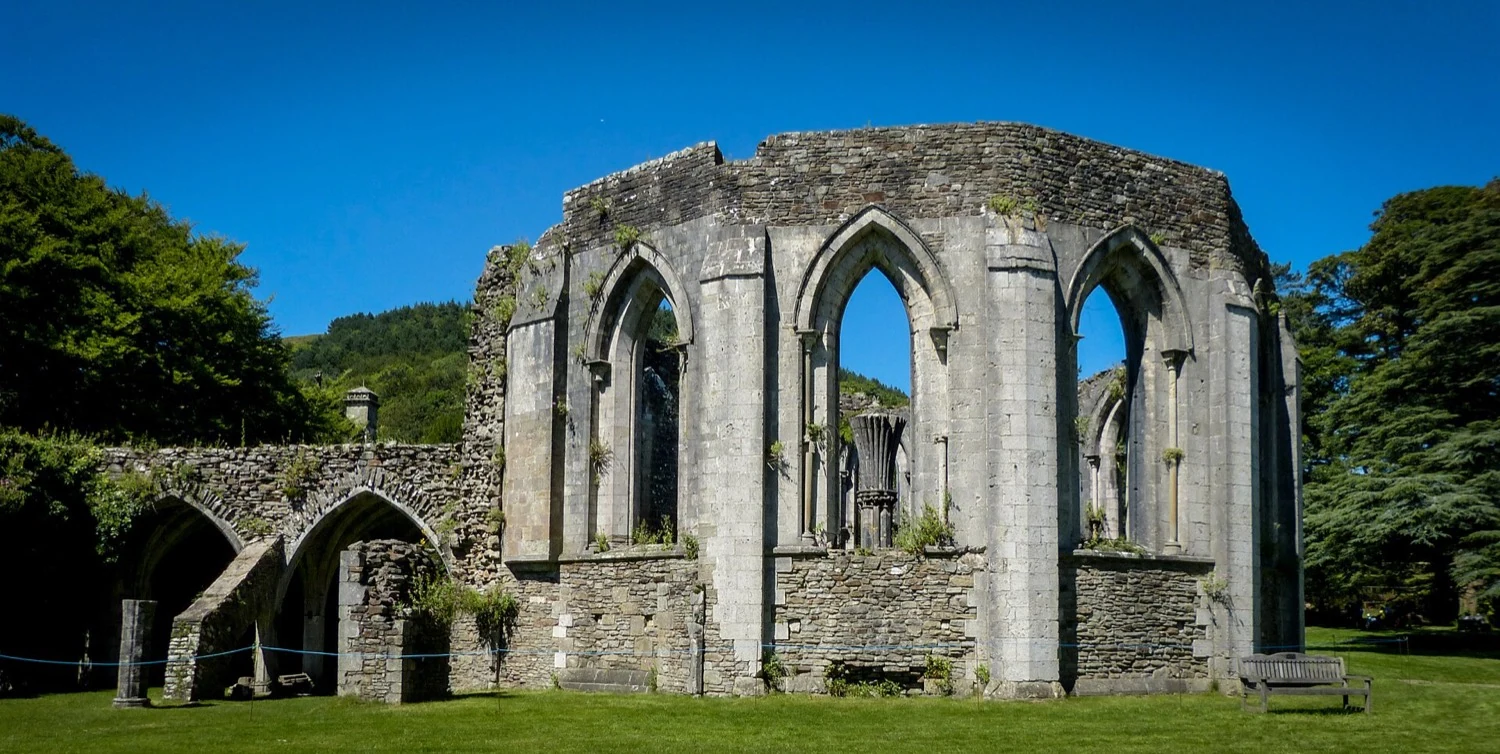
At Margam, near Port Talbot, in Glamorgan, a Cistercian abbey became, at the Reformation, the seat of a great Welsh gentry family. Margam emblematically illustrates the conversion of monastic lands into a Tudor aristocratic domain — one of the great transfers of wealth of the century.
The closure of the abbey
The Cistercian abbey of Margam was closed by Henry VIII's visitors in August 1536, during the first wave of the Dissolution. The last abbot, Lewis Thomas, and a dozen monks were expelled, ending centuries of monastic life. As everywhere, the vast lands and revenues of the abbey passed to the Crown, before being redistributed — for the benefit, here, of an ambitious royal servant.
The new seat of the Mansels
Sir Rice Mansel, a Welsh courtier already master of Oxwich, took possession of Margam for the king, then acquired most of the estate's lands. He built there a Tudor house on the former monastic buildings — like so many families enriched by the Dissolution, he transformed a place of prayer into a seigneurial residence. The Mansels eventually abandoned Oxwich to make Margam their new seat; the vast domain (18,725 acres) then passed to the Talbots, who became the greatest resident landowners of Glamorgan. The abbey's Romanesque nave, for its part, survived as the parish church of St Mary. Margam thus illustrates how the Reformation endowed a rising gentry with its great domains. To see: the surviving Romanesque nave (parish church of St Mary), the remains of the polygonal chapter house, the orangery and the park of Margam Country Park.
Did you know?
The Mansels made a telling choice: rather than keep their sumptuous Renaissance house at Oxwich, they preferred to settle at Margam, on the ruins of the dissolved abbey. Why? Because Margam, with its thousands of acres of monastic land, represented a far greater source of wealth and power. The Dissolution offered the ambitious gentry not only stones, but entire domains — and one readily abandoned a fine manor for a vast territory.
Notes
Margam Abbey lies at Margam, Port Talbot (Neath Port Talbot, Glamorgan); the parish church of St Mary (Romanesque nave) and remains in Margam Country Park, open to the public. Hours to check.
Quiz
- When was Margam Abbey closed?
- In August 1536 (Dissolution)
- In 1201
- In 1605
- Who built a Tudor house on the site?
- Sir Rice Mansel
- The pope
- Owain Glyndŵr
- To which family did the domain then pass?
- The Talbots (greatest landowners of Glamorgan)
- The Percys
- The Tudors