
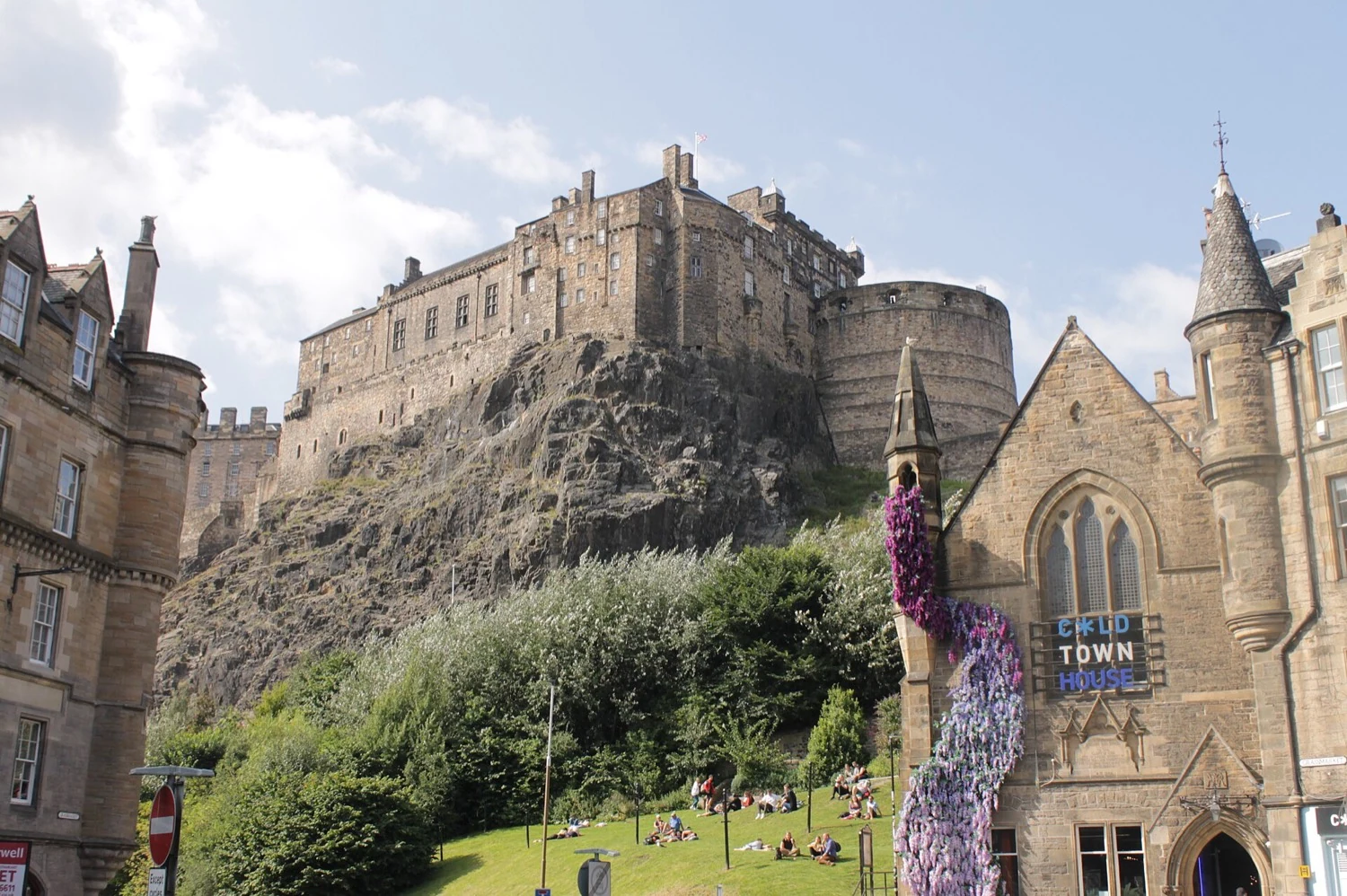
Standing on a volcanic rock at the top of the old town, Edinburgh Castle dominates the Scottish capital and its Royal Mile. An impregnable fortress, prison, arsenal and royal residence, it was the refuge of the sovereigns in turmoil — and the place where the child was born who would unite Scotland and England.
The rock of kings
The castle crowns the 'Castle Rock', a volcanic crag that dominates Edinburgh with its sheer drop. Occupied since the Iron Age, become a royal stronghold in the Middle Ages, it holds the oldest building in the city, the little St Margaret's Chapel (twelfth century). The bolt of the capital, it was besieged a thousand times: whoever held the castle held Edinburgh, and often Scotland. In the Renaissance the fortress, less comfortable than Holyrood, served above all as a refuge in times of crisis and as the strongroom of the kingdom — here were kept the archives, the artillery (including the famous giant cannon Mons Meg) and the insignia of the Crown.
The birth of a king of both realms
The most consequential episode took place in 1566. Besieged by troubles and feeling in danger, Mary Stuart chose to withdraw to the safety of Edinburgh Castle to give birth. On 19 June 1566 she bore there a son: James. This child, born on the rock of Edinburgh, would become James VI of Scotland and then, in 1603, James I of England, uniting under a single head the two crowns of the island. The castle also keeps the Honours of Scotland — crown, sceptre and sword of state, among the oldest royal insignia in Europe — and the legendary Stone of Destiny. A fortress of war and a casket of national symbols, it remains the historic heart of Scotland.
What to see
- St Margaret's Chapel (twelfth century), the oldest building in the city.
- The chamber where James VI was born in 1566.
- The Honours of Scotland (Crown Jewels) and the Stone of Destiny.
- The giant cannon Mons Meg and the view over the old town.
Did you know?
Mary Stuart chose to give birth at Edinburgh Castle, and not in the comfort of Holyrood, because she knew herself safe there: a few months earlier, before her eyes, her secretary Rizzio had been murdered, and she feared for her life and her child's. So it was in the small chamber of a fortress, out of caution and fear, that the future king of both realms was born. The Union of the Crowns of 1603 thus has, for a cradle, a fortified recess at the top of a rock.
Practical information
Edinburgh Castle lies at the top of the old town of Edinburgh, at the western end of the Royal Mile. It is today a site in the care of Historic Environment Scotland, open to the public. Opening hours and days are liable to change; it is best to check them against the official sources before visiting.
Quiz
- Which future king of both realms was born at Edinburgh Castle in 1566?
- James VI (future James I)
- Charles I
- Henry VIII
- What is kept at Edinburgh Castle?
- The Honours of Scotland (Crown Jewels)
- The King James Bible
- Holbein's cartoons
- Why did Mary Stuart choose to give birth there?
- For safety, after the murder of Rizzio
- For the beauty of the gardens
- On the order of the King of France