
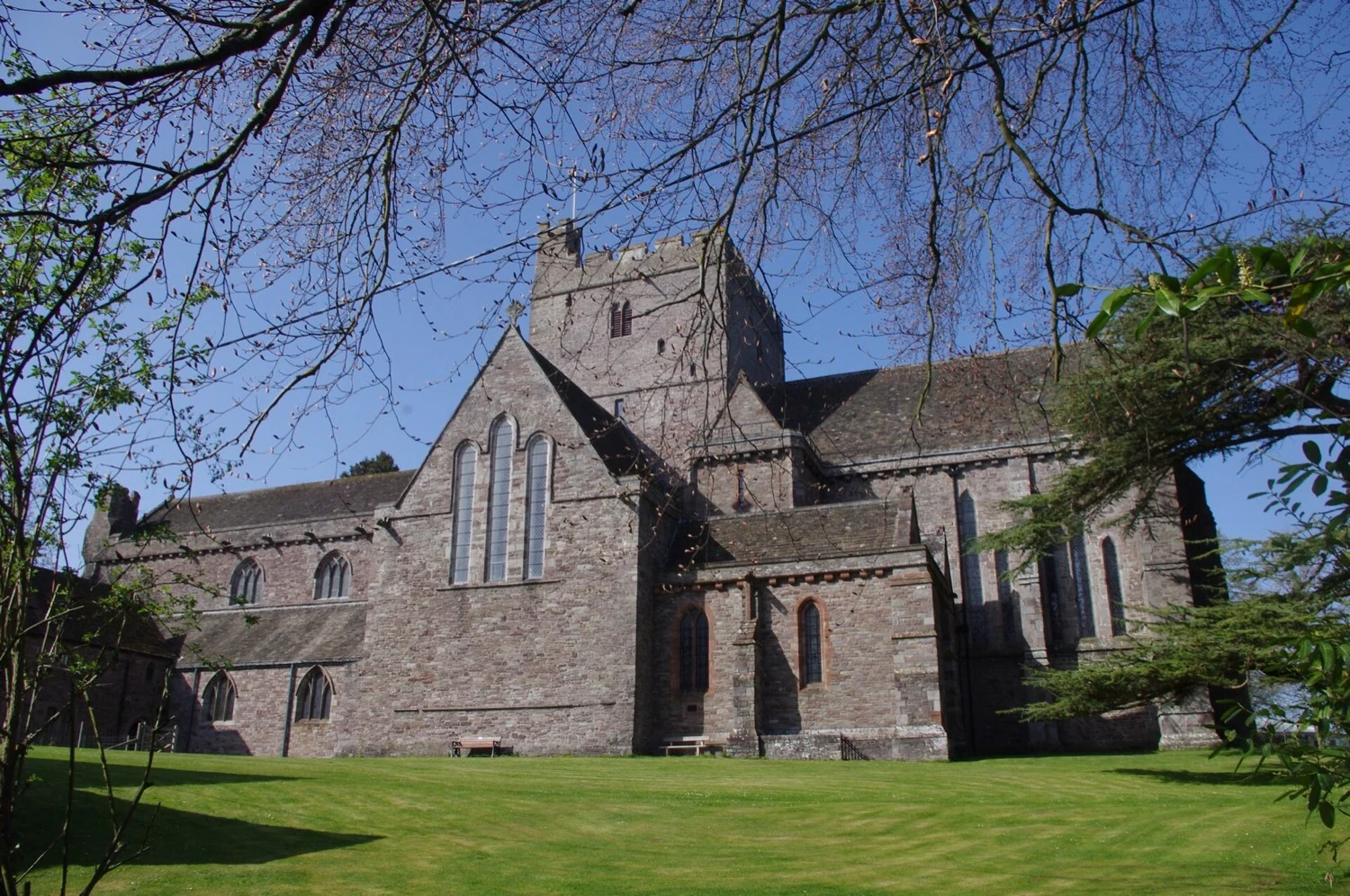
At Brecon (Aberhonddu), in Powys, the present cathedral was originally the Benedictine priory of St John. Its history in the Renaissance illustrates the typically Tudor passage from monastery to parish: stripped of its object of pilgrimage, the church survived by changing status.
A priory at the turn of the century
The former Benedictine priory of St John knew its last building campaign at the very start of the sixteenth century, with the raising of its tower. It was a modest but active monastic establishment, endowed with a famous object of devotion: the 'golden rood', a golden cross that drew pilgrims. As everywhere in Wales, these pilgrimages were a source of revenue and religious life — and were to be swept away by the Reformation.
From monastery to parish
At the Dissolution of the Monasteries (1537), the priory was suppressed: the 'golden rood', an object of pilgrimage judged superstitious, was destroyed, and in 1538 the prior was pensioned. But, as in many other towns, the priory church was not razed: it survived by becoming the parish church of St John, now serving the town rather than a monastic community. It is this passage — from monastery to parish — that saved the building, as at Tewkesbury or Sherborne in England. The church would become a cathedral only much later, in 1923. To see: the Norman/Tudor tower, the thirteenth-century choir, the Norman font, the site of the former 'golden rood'.
Did you know?
The 'golden rood' of Brecon — the golden cross venerated by pilgrims — was destroyed at the Dissolution, like most of the great medieval objects of devotion, judged 'idolatrous' by the reformers. But the church itself was saved: because a community needed a place of worship, it was kept as a mere parish. It was thus that so many architectural jewels of Wales came through the Reformation — not by their beauty, but by their rediscovered usefulness.
Notes
Brecon Cathedral lies at Brecon (Aberhonddu), Powys; a cathedral (since 1923) in use, open to visits. Hours to check.
Quiz
- What was Brecon Cathedral originally?
- The Benedictine priory of St John
- A castle
- A university
- What was destroyed at the Dissolution (1537)?
- The 'golden rood' (pilgrims' golden cross)
- The tower
- The crypt
- How was the church saved?
- It became the parish church of St John
- It was hidden
- It was sold to France