
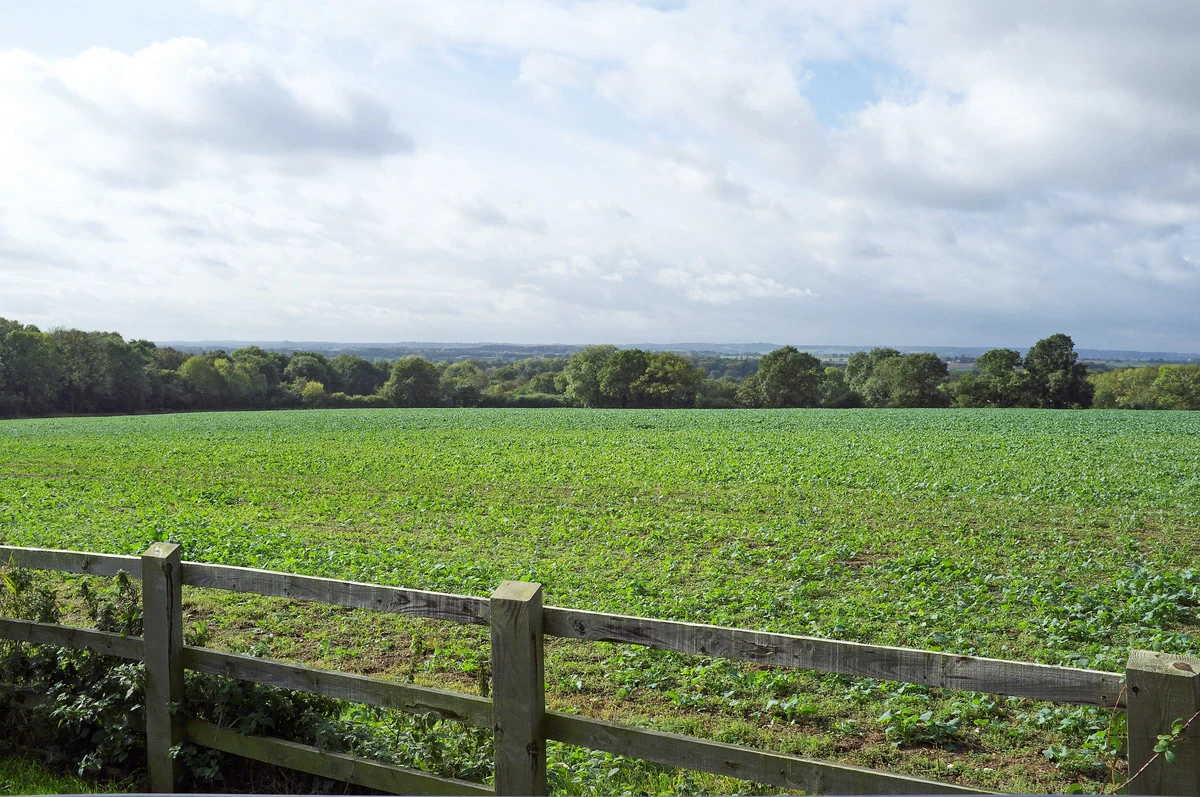
In the Leicestershire countryside, the battlefield of Bosworth is the very starting point of our atlas: it was here, on 22 August 1485, that one of the most decisive battles in English history was fought. The death of Richard III and the victory of Henry Tudor there ended the Wars of the Roses and opened the age of the British Renaissance.
The battle that made the Tudors
On 22 August 1485, the armies of Richard III, last king of the house of York and last of the Plantagenets, and of Henry Tudor, exiled Lancastrian claimant, met near Market Bosworth. The battle turned when Lord Stanley and his brother Sir William Stanley, until then hedging, rallied at the last moment to Henry's side: Richard III, charging into the heart of the mêlée to kill his rival, was cut down — the last king of England to die in battle. Henry Tudor was proclaimed king under the name of Henry VII on the field itself. No place better embodies the founding boundary of 1485: the end of the English Middle Ages, the coming of the Tudors, the beginning of the Renaissance.
A field rediscovered, a king identified
Bosworth is also an extraordinary archaeological adventure. For a long time, the exact site of the battle remained uncertain (one of 'the most poorly documented battles' by its contemporary sources); in 2009, excavations identified its real site, a few kilometres from the historical interpretation centre. Above all, in 2012, a skeleton with a deformed spine was exhumed beneath a Leicester car park and identified by DNA as Richard III himself — one of the greatest recent British archaeological discoveries. The king who fell at Bosworth was reburied with great pomp at Leicester Cathedral in 2015. To see: the exhibitions and reconstructions of the interpretation centre, the battlefield trails, the markers of Richard III's charge and death (and, at Leicester, the king's tomb and the King Richard III centre).
Did you know?
In 2012, Richard III was found beneath a Leicester car park. The skeleton, with its spine twisted by scoliosis (confirming the 'hunch' the chroniclers and Shakespeare attributed to him), bore the mortal wounds received at Bosworth in 1485. DNA, compared with that of descendants of his sister, confirmed the identity. The last Plantagenet king, killed and buried without glory five centuries earlier, was thus restored to history — and to a royal grave.
Notes
Bosworth Battlefield Heritage Centre lies near Sutton Cheney / Market Bosworth, Leicestershire; interpretation centre and trails open to the public. GPS to be specified (Ambion Hill vs the field identified in 2009). In addition, at Leicester: Richard III's tomb (cathedral) and King Richard III Visitor Centre.
Quiz
- What happened at Bosworth on 22 August 1485?
- Richard III was killed, Henry Tudor became Henry VII
- A peaceful coronation
- A naval battle
- What did this battle open?
- The Tudor age and the English Renaissance
- The Hundred Years' War
- The Victorian era
- What was discovered at Leicester in 2012?
- The skeleton of Richard III (beneath a car park)
- A Roman treasure
- Shakespeare's tomb