
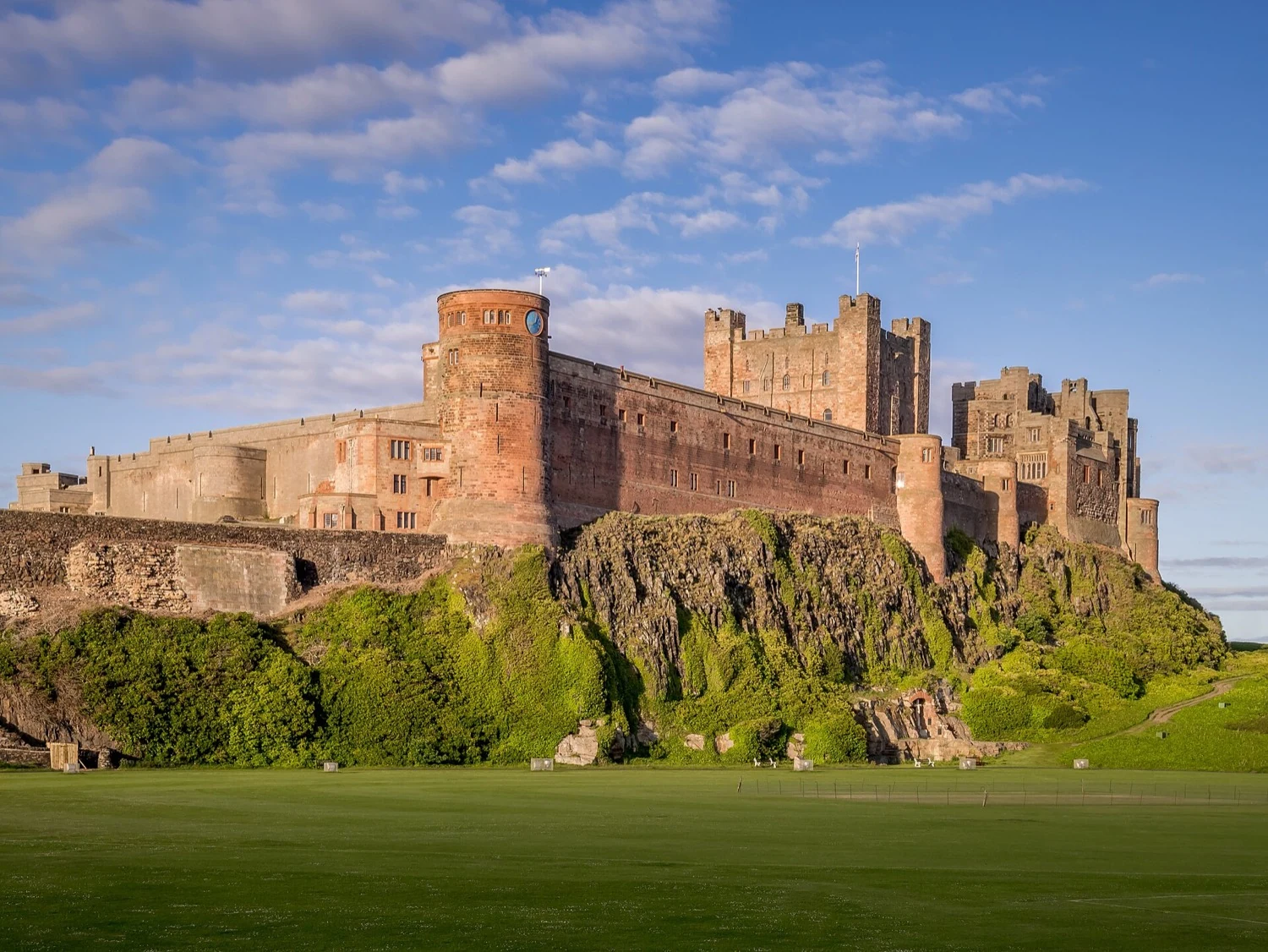
On an outcrop of dolerite dominating the North Sea and the Farne Islands, Bamburgh Castle offers one of the most spectacular silhouettes in England. This royal fortress entered military history just before our period, through a decisive event: it was the first English castle reduced by artillery — a sign foretelling the end of the medieval fortresses.
The first castle taken by the cannon
In 1464, during the last convulsions of the Wars of the Roses, Bamburgh was besieged by Richard Neville, Earl of Warwick — 'the Kingmaker'. After nine months of resistance, the fortress fell under the fire of Neville's artillery: it thus became, according to tradition, 'the first British castle taken by the cannon'. This event, on the very eve of the coming of the Tudors (1485), announces a major turning point: gunpowder was making the high medieval walls obsolete, opening the new era of low, bastioned forts. Bamburgh thus marks, in our atlas, the threshold of a changing world.
A royal fortress become seigneurial
After the Tudor victory, Bamburgh followed the fate of the great fortresses. In the mid-sixteenth century, after the Dissolution, the Crown granted it to Sir John Forster, warden of the East March facing Scotland — one of those men who, on the border, combined military office and local power, often on the edge of legality. The Forster family held the castle until its sale for debt in 1700. Bamburgh thus illustrates the transformation of a front-line royal fortress into a seigneurial holding, as the border eased after the Union of the Crowns. To see: the Norman keep of Henry II, the state apartments, the spectacular position on the dolerite outcrop facing the Farne Islands.
Did you know?
The fall of Bamburgh in 1464 tolled the knell of an era: for the first time in Britain, a powerful medieval fortress was reduced not by famine or treachery, but by the sheer firepower of the cannon. The high walls that had defied attackers for centuries suddenly became vulnerable. Twenty years later the Tudor dynasty was born — whose coastal forts of Henry VIII, low and rounded, would draw the lesson of Bamburgh: in the age of gunpowder, everything had to be rethought.
Notes
Bamburgh Castle lies at Bamburgh, on the Northumberland coast; a castle (Armstrong family) open to the public. Hours to check.
Quiz
- What is historic about the siege of Bamburgh in 1464?
- It was the first British castle taken by artillery
- The longest siege in history
- A Scottish victory
- Who led this siege?
- Richard Neville, 'the Kingmaker'
- Henry VIII
- Mary Stuart
- To whom did the Crown grant Bamburgh in the sixteenth century?
- Sir John Forster, warden of the East March
- The pope
- The Percys