
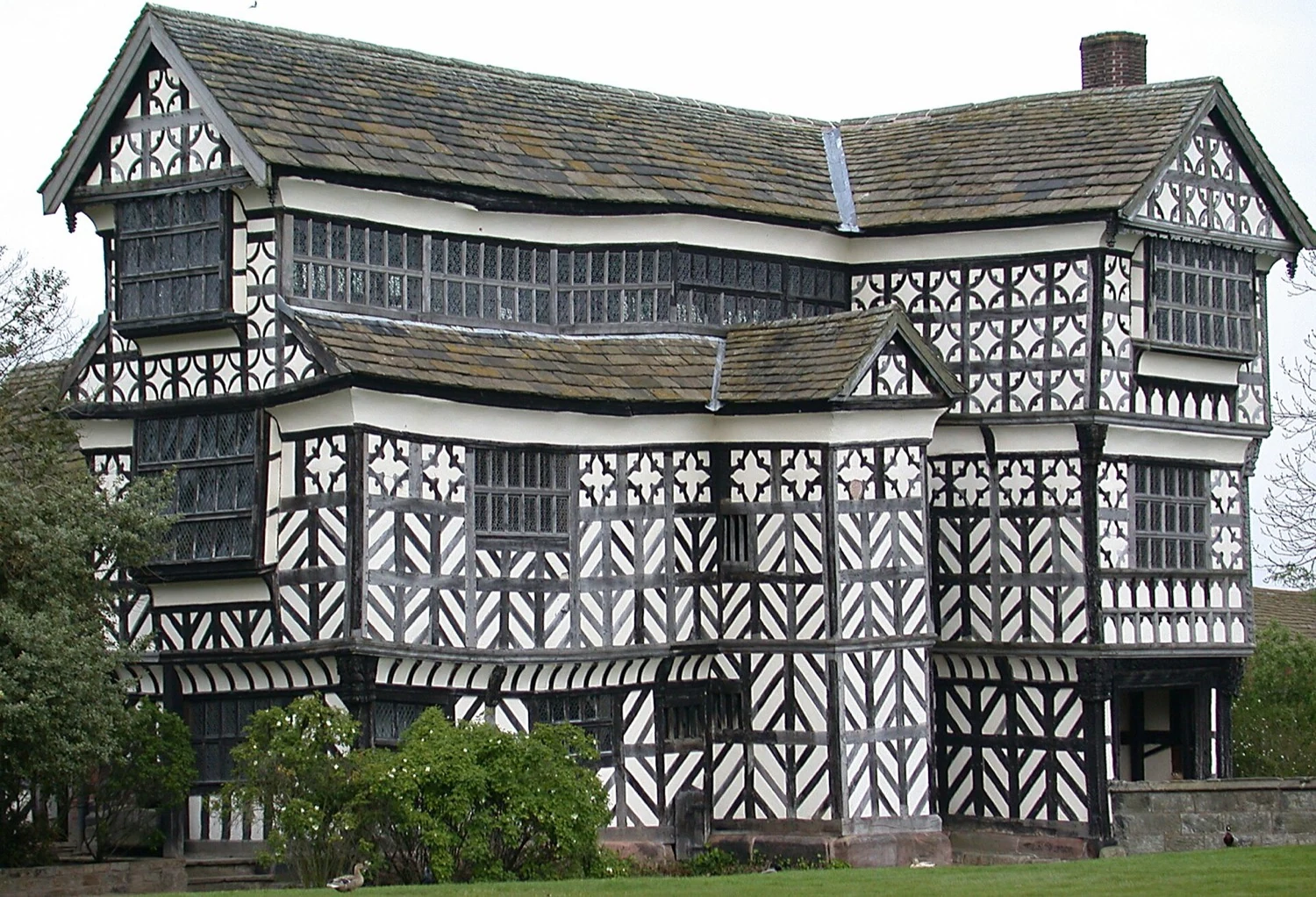
To see: at Little Moreton, the sculpture is of wood. This timber-framed manor, one of the maddest in England, covers its façades with a weave of quatrefoils, chevrons and lozenges cut into oak, to the point of optical vertigo. The highlight is the pair of great oriel bay windows added in 1559: beneath their gables runs a carved inscription — "God is Al in Al Thing: This windous whire made by William Moreton in the yeare of oure Lorde MDLIX" — followed by the signature of the carpenter Richard Dale. Rarely, the craftsman cut his own name into the work. Inside, the long gallery keeps two allegorical figures in painted plaster relief, Destiny (with the spear) and Fortune (with the wheel) — this Renaissance speaks English, in oak and plaster.
Did you know?
The 1559 inscription is one of the rare cases where patron and craftsman sign together: William Moreton and his carpenter Richard Dale share the glory, cut for eternity beneath the windows. The weight of those added bays warped the house, which has leaned charmingly ever since.
Info
- Timber-framed manor; oriel bay windows dated and signed 1559 (carpenter Richard Dale).
- Decoration: quatrefoils, chevrons and lozenges carved in oak; the bay-window inscription; painted plaster reliefs of Destiny and Fortune (long gallery, c.1580).
- Materials: wood (oak), stone, plaster.